Make Your Own Tuckbox—what’s in your deck? what’s your deck in?


If you look up “tuckbox” on-line, you may find that it is a box of food, especially goodies from home. However, if you ask someone who plays table-top games, he or she will tell you that it is a box for a deck of cards with a flap that “tucks” closed, like the cases that playing cards often come in. There are templates for tuckboxes available on-line, so if your playing cards are being held together by a rubber band, you can make them a nice new case out of cardstock.
It isn’t just old playing cards that might benefit from a new tuckbox. What about vocabulary flashcards? Art trading cards? Zentangle™ tiles? Cards with activity ideas or inspirational quotations? And, of course, collectible card games, if you haven’t encased all the cards in plastic envelopes instead.
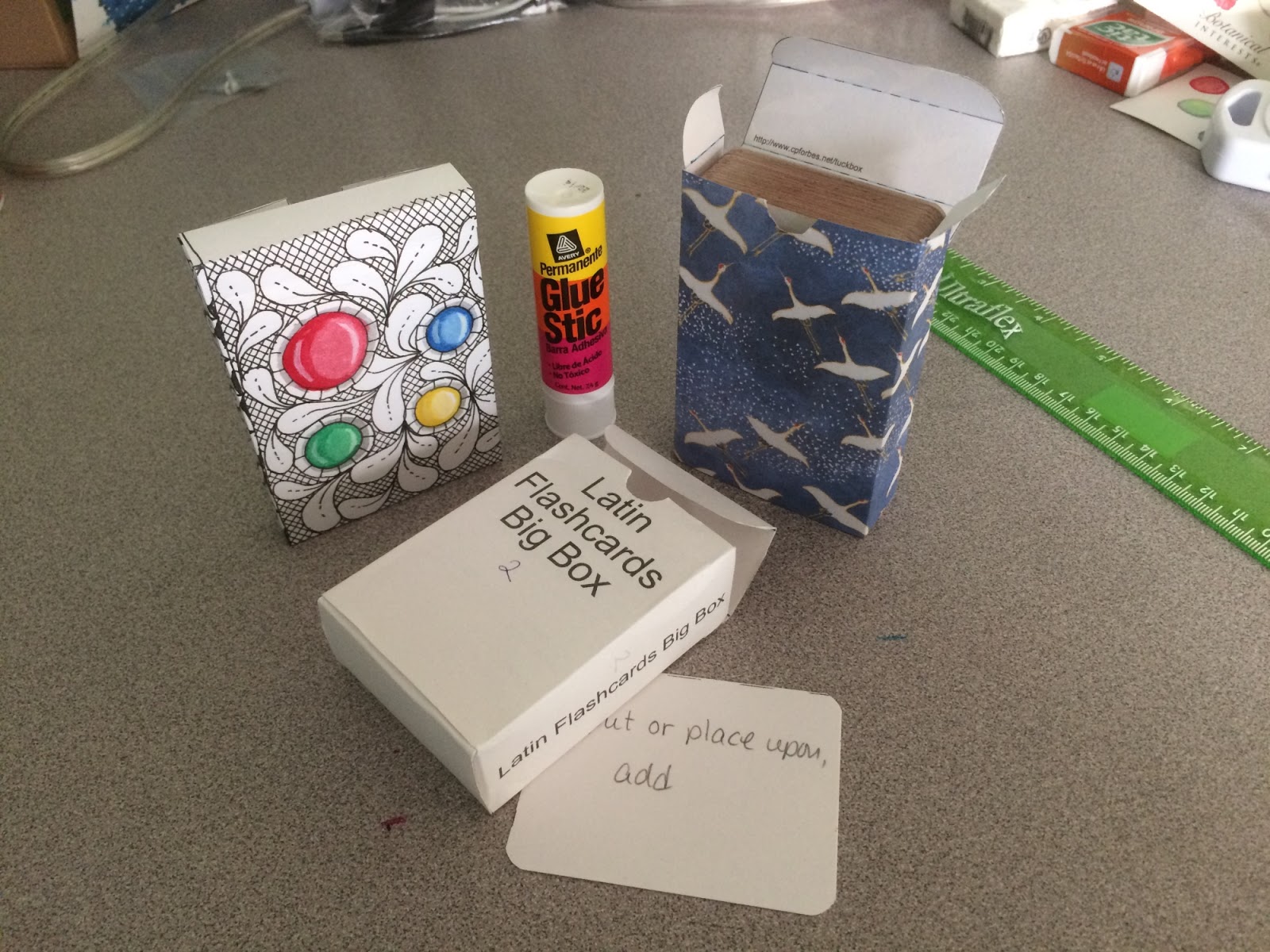
Tuckboxes for cards with labels or Zentangle style decoration or chiyogami
The source I like is Craig Forbes’ Super deluxe tuckbox template maker. It allows you to generate and print an outline for different size tuckboxes to fit different kinds of cards and different size decks by entering their dimensions. (NOTE: be sure to select “actual size” when printing, not “print to fit”.) Then cut out the outline, score the foldlines (I go over them firmly with a ballpoint and a ruler), fold and glue. A gluestick works well for me.
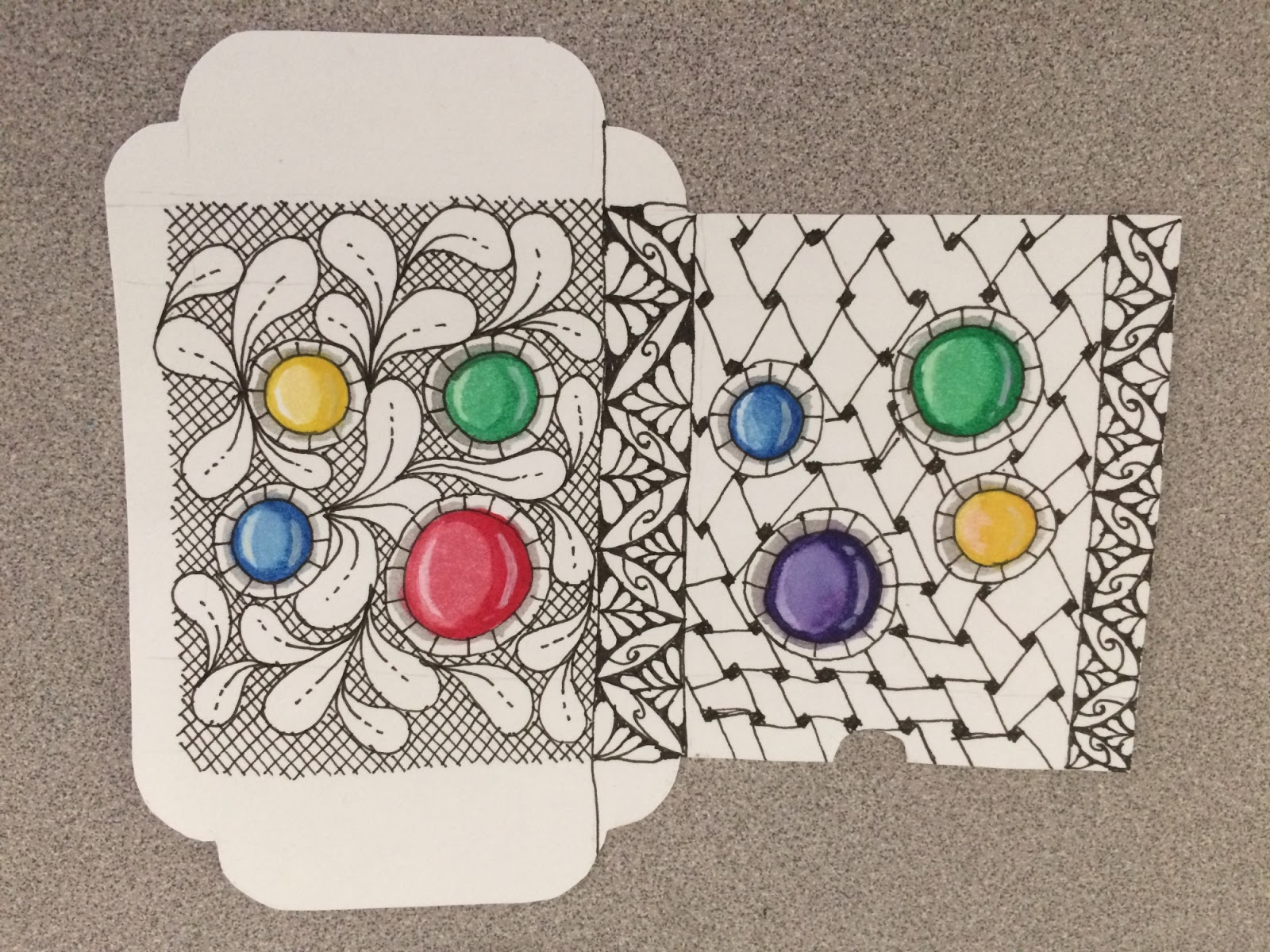
If all you want is a tuckbox that is neat and functional, you can enter a label in the generator, then print the tuckbox outline on one side of the cardstock and the label on the other. But the possibilities for decoration are what make this fun. You can get a chiyogami pattern from the Canon website and print that on one side of the cardstock, then print the tuckbox outline on the other. Or you could cut the tuckbox out and then draw something Zentangle-ish on the blank side. Or paint a picture, glue on fake gems—it’s your tuckbox.
Tuckbox decorated Zentangle style with painted gems but not folded yet
Till next post.

The Reusable Fabric Grocery Bag—a quest to make the perfect bag


I know I should bring my own reusable grocery bags instead of accumulating endless plastic ones. While some of the plastic bags have a second life as receptacles for kitty litter or as lining for small wastebaskets, the majority get one use and then it’s off to the plastic bag recycle bin.
I have some reusable grocery bags already. Sometimes they are even in my car when I go shopping. I think there are two reasons I tend not to use them. 
The first is that I forget to hand them over to the cashier before she or he starts bagging—and then it seems to be too late. Once I handed the bag over late, thinking that, well, the next bag’s worth of groceries could go in it, and the cashier actually took the groceries OUT of the plastic bag and put them in my bag. I totally did not intend that, but couldn’t seem to stop her in time. So the plastic bag had already been used AND she’d bagged those groceries twice. What a waste.
The other reason is that it seems so inconvenient for bagging. Plastic bags come with those metal racks to hold them open, and paper bags stand up by themselves, making bagging easy (or at least easier.) Reusable bags seem to come in two kinds—stiff and not terribly washable, or washable but floppy. I want a bag I can wash every now and again, but I hate handing the cashier a floppy bag because I feel like I’m creating extra work.
(Note: with the trend toward increasing self-service, at airports, banks, and now grocery stores, perhaps we will soon be bagging all our own groceries. They already do that in some other countries. I can’t say I’m enthusiastic at the prospect. And while it might cut down on carpal tunnel in cashiers, it seems more likely that it would just cut down on the number of cashiers, and so the number of cashier jobs available.)
So, regardless of who actually does the bagging, here are my criteria for the ideal reusable fabric grocery bag:
1.      Washable.
2.      Stiff enough to stand open.
3.      Folds when not in use. (Otherwise, baskets might work.)
I imagine my ideal bag resembling a paper bag—wide, flat-bottomed, short-handled. Actually, the length of the handles depends on whether you are just carrying bags in and out of your car, or having to take them on the bus. Short handles are ideal if you are carrying a bag in each hand, but no use if you want to sling the bag over your shoulder. But a shoulder bag can’t be filled quite as full, I think. Since I usually grocery-shop by car, I want short handles.
Bonus points: Can be made with materials I already have.
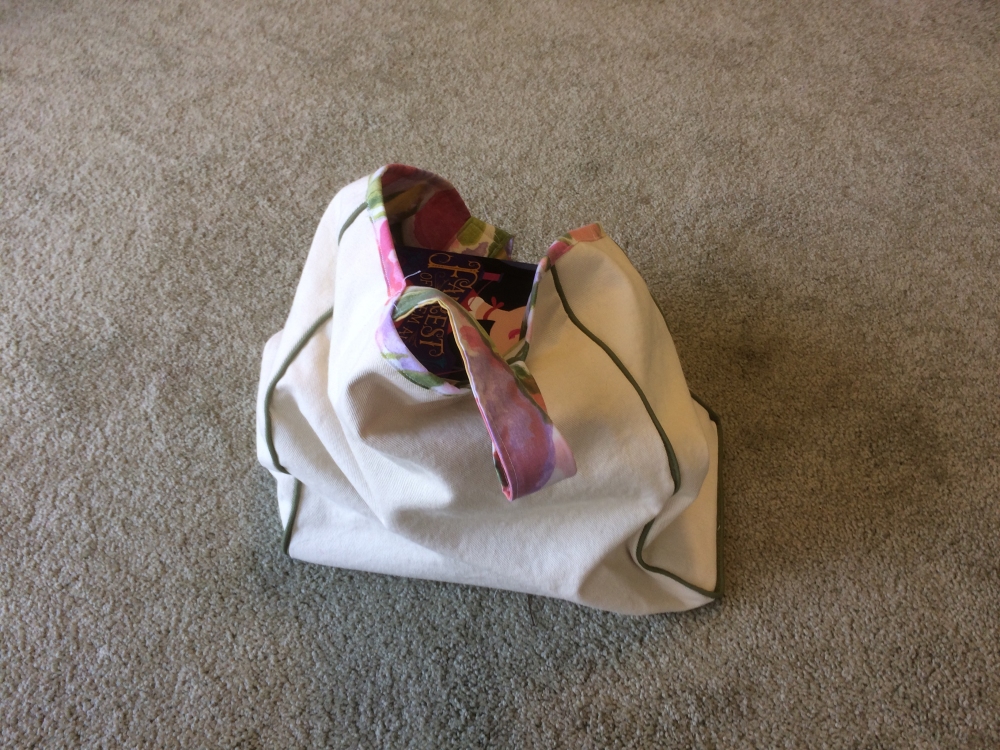
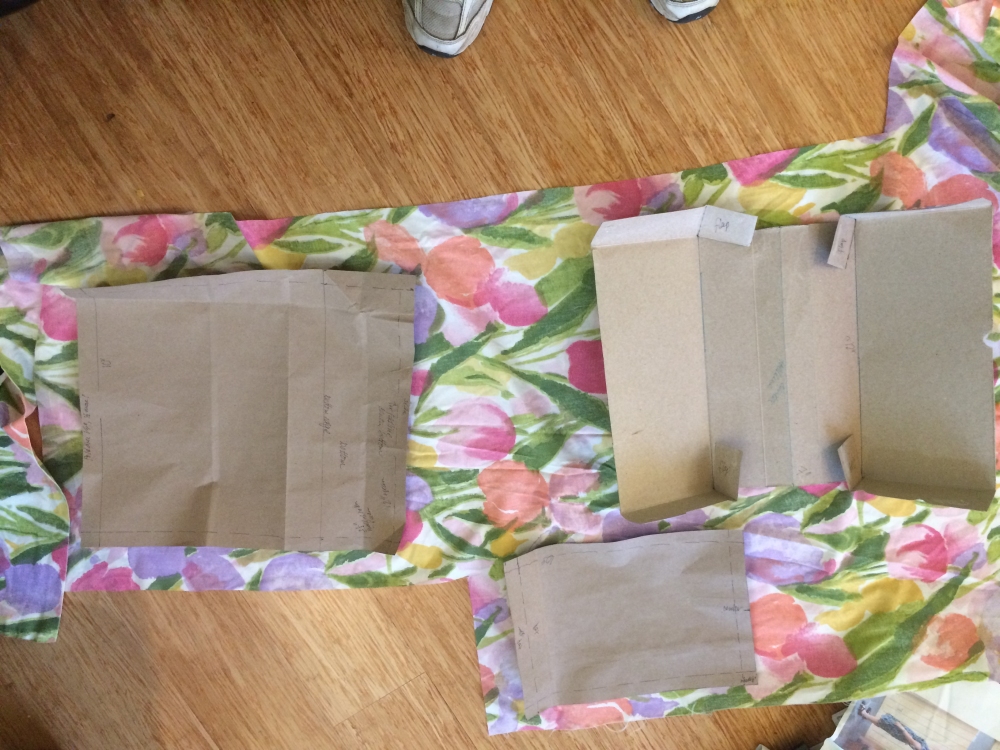
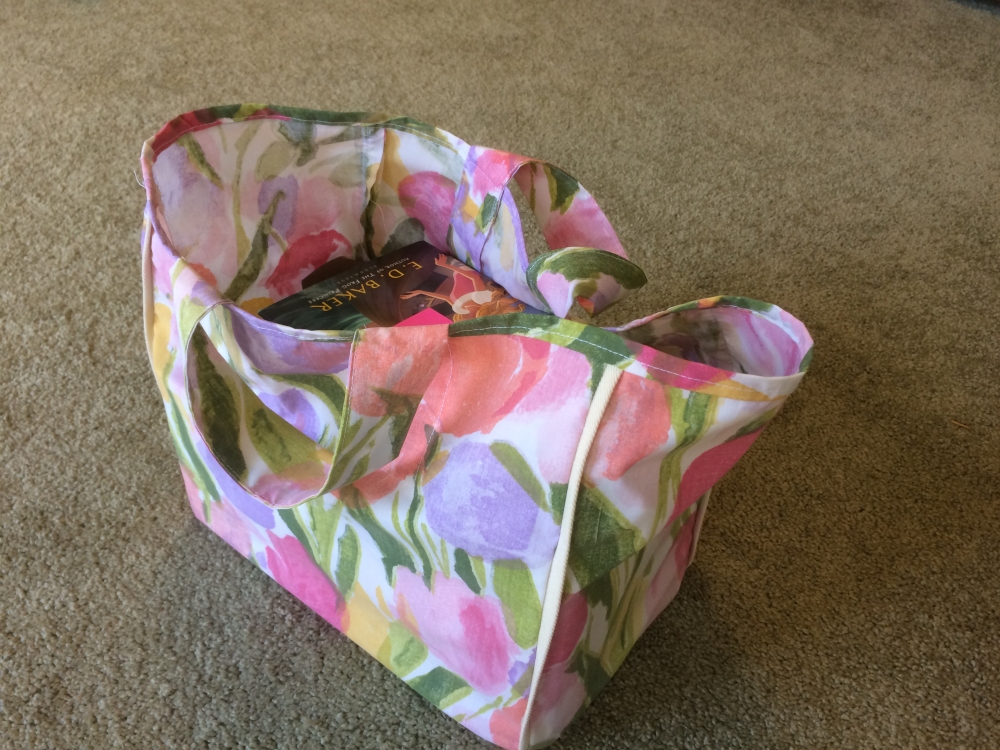
One way to make a bag stiff is to use stiff material. For Grocery Bag Version 1, I made the exterior from some leftover canvas (or maybe it was heavy muslin), with piping along the edges (hoping that would add stiffness.) (Pattern was a modified version of The Spruce’s grocery bag.) I lined it with remnants of a floral sheet, and put a piece of cardboard on the flat bottom.
 
The result, as you can see, is still very floppy. Presumably a really heavy canvas would have given me something like a tote from  L.L. Bean, which is definitely stiff enough to stand up, but not good for washing or folding.
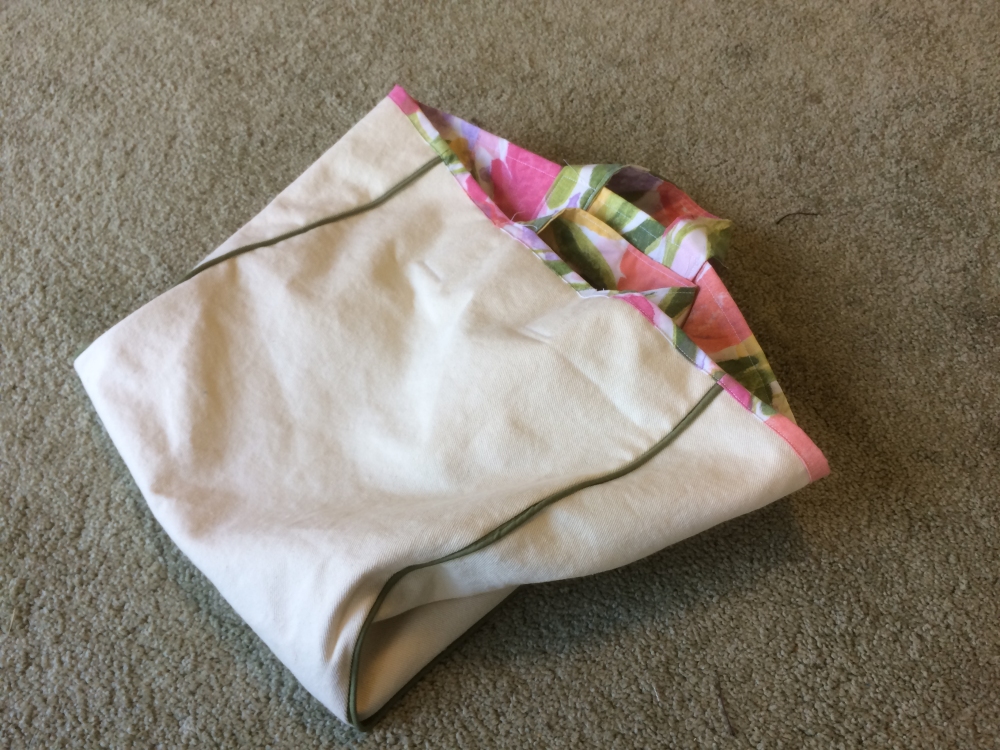
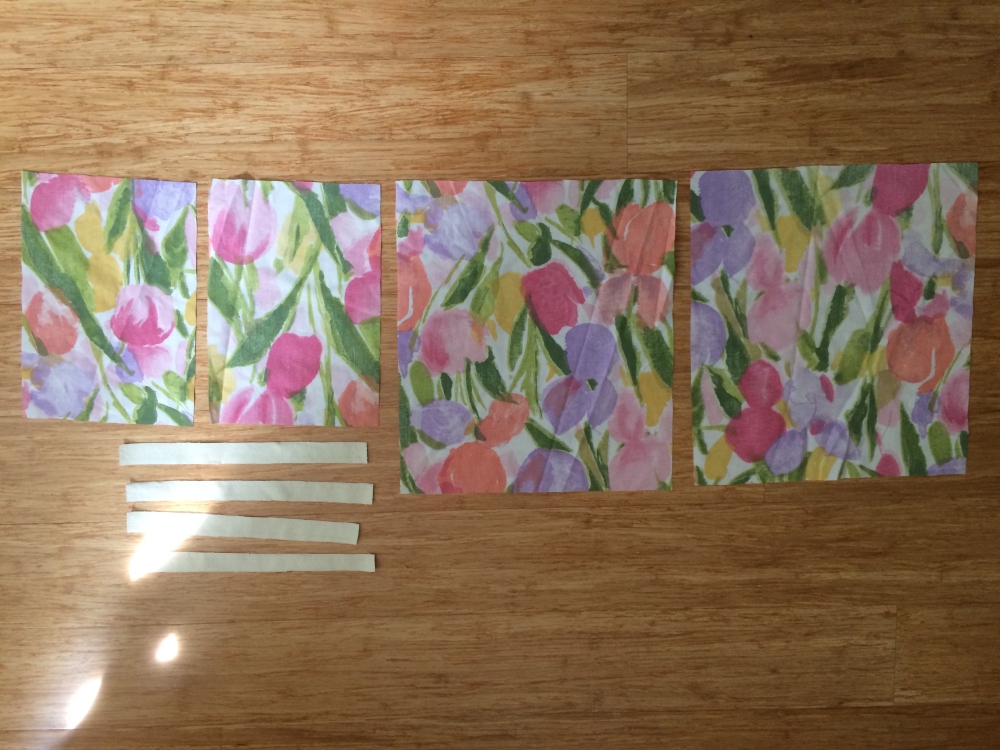
Grocery Bag Version 2 is a lightweight bag made just from the floral fabric with no lining. I did put strips of the muslin/canvas along the edges in place of piping. The goal here was to use a cardboard insert made from a cereal box to create a boxy shape. The difficulty is trying to come up with an insert that folds away neatly. This one sort of folds. Not nearly well enough. It might also be too lightweight when faced with canned goods. I haven’t tested it.
I also made this bag shorter, so it would be easier to load. This might have a cost in terms of what groceries it can hold—a baguette would probably fall out.
There must be all sorts of grocery bag plans out there that I didn’t find in my relatively short search. Maybe a removeable folding wire frame, or a stiff exterior with removable washable lining?
Has anyone found one that meets all my requirements? Please comment.

Listening to Music–Old songs, new songs


“Make new friends, but keep the old;
One is silver and the other gold.”
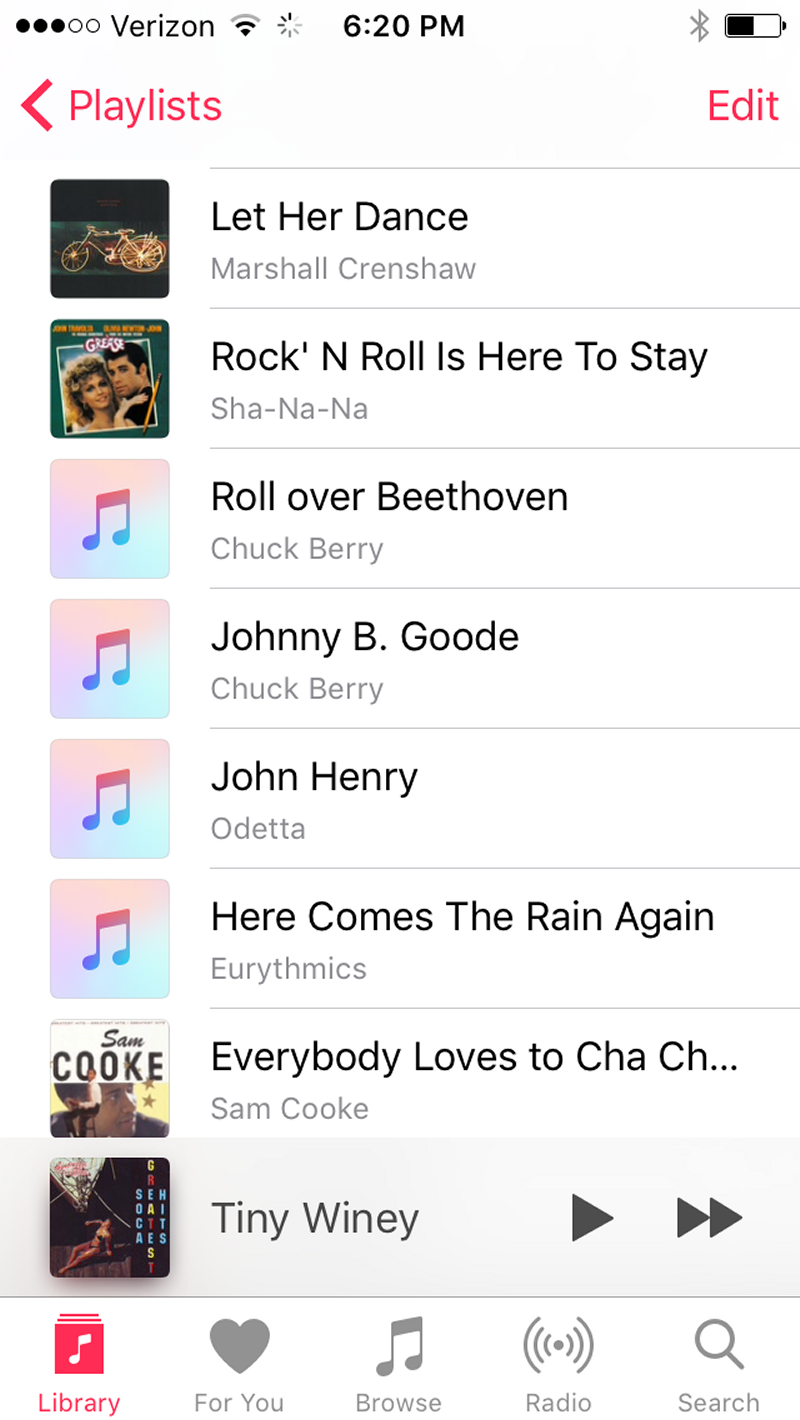
I had put on an old playlist yesterday as I unloaded the dishwasher, and was really enjoying the songs. Many of them had been my favorites long ago, such as “Fame”, “The Sound of Silence”, and “Johnny B. Goode.” That started me thinking about balancing time spent listening to familiar music versus time spent listening to music I haven’t heard before.
This is really a dilemma that applies more broadly, such as to movies and books, but maybe it is more vivid in the case of music because so much of listening to music is re-listening. We don’t even bother to call it “re-listening”, though we often say we are “re-reading” a favorite book, or (less often) that we are “re-watching” a movie we’ve seen.
When we start life, it’s all new. “Twinkle, Twinkle, Little Star”, “The Itsy-bitsy Spider”, “The Wheels on the Bus”—it’s all wonderful new stuff to learn and sing over and over (and over and over and over…). For quite a while, we get flooded with new music to enjoy, even as we love to repeat our (still few in number) favorites.
Somewhere along the line, the situation changes. We already know a lot of songs, have long lists of things we like to hear, and spend less and less time listening to new ones. Obviously some people, especially people who are very into music, still spend a lot of time listening to new stuff, but people like me hear remarkably little of it. (The situation is exacerbated in my case by the fact that I rarely turn on the radio.)
One source of new songs is other people, but here technology has interrupted the proper passing on of musical knowledge. So many people listen to music on headphones—I’m referring of course to teen-age daughters—that although parental ears are spared a constant barrage of Someone Else’s Music and especially What Are They Listening To Now?, it also means fewer opportunities to make new discoveries.
I think my mom quite liked some of those Billy Joel songs.
The song on the playlist that brought this particular fact to mind (remember, I said I was listening to an old playlist) was “Mean”, sung by Taylor Swift. It was on my playlist because at the time my daughter was listening to Taylor Swift, she didn’t have a cellphone (smart or otherwise) and all the music ended up on my hard drive. For some reason, I really liked “Mean.” I doubt I would have heard it if not for her.
But as fun as “Mean” is, I owe a much greater musical debt to my daughter.
Hamilton.
She was walking around the house for weeks—or was it months?—earbuds plugged in, humming happily, before I said, “Maybe you could play it for me while I’m sewing.”
The first listen-through was confusing and I hardly understood any of the words, but the second half sounded promising. Some music needs more than one hearing to be appreciated, and the second listen-through was the charm, in this case. I’ve been playing it in the car for months now, I think.
So how should I balance re-listening versus trying new music? At this point, I’ve heard enough music in my life (including all the stuff that was playing when I was in high school and college, whether I remember it vividly or not), that I could probably get thro

ugh the entire rest of my life just listening to things I already enjoy. Why make an effort to hear anything new?
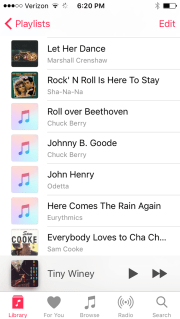
I say again, Hamilton. (Really, I cannot recommend it enough.) I could easily have missed Hamilton entirely, because most of my accidentally-discovered new music comes from movies (“Try Everything” in Zootopia) or TV (“Tiny Winey” in Death in Paradise) and occasionally my husband (when he discovers someone new, which isn’t all that often—Paul Thorn, e.g.)
And without Hamilton, my life would be that much poorer.
So what’s the take-home point of all this? Nothing surprising. Just that it’s worth trying something new, sometimes, even when you’re happy with the tried-and-true. In the case of music, the song about friends I quoted doesn’t really even apply. The mere fact that you’ve been enjoying a song for decades doesn’t confer gold status on it, and not all new songs are mere silver by comparison.