The Mini-Backpack, Round Two

Some time ago, I sewed a mini-backpack that was loosely based on the mini-backpack I use regularly as a purse. I always meant to have another try, hoping to produce a mini-backpack that was more attractive, less floppy, and lined. Finally, here’s attempt number two.

The denim mini-backpack.

I think it came out pretty well, despite some problems during sewing. In the photo, it is stuffed to make it look better, but it retains some shape even empty. For one thing, I used plastic “string” from the string trimmer (e.g. Weed Whacker) to give the back edge some stiffness.

I did try a lining this time, though I didn’t line the entire inside. Ideally, the lining would have pockets. Maybe the next version will.
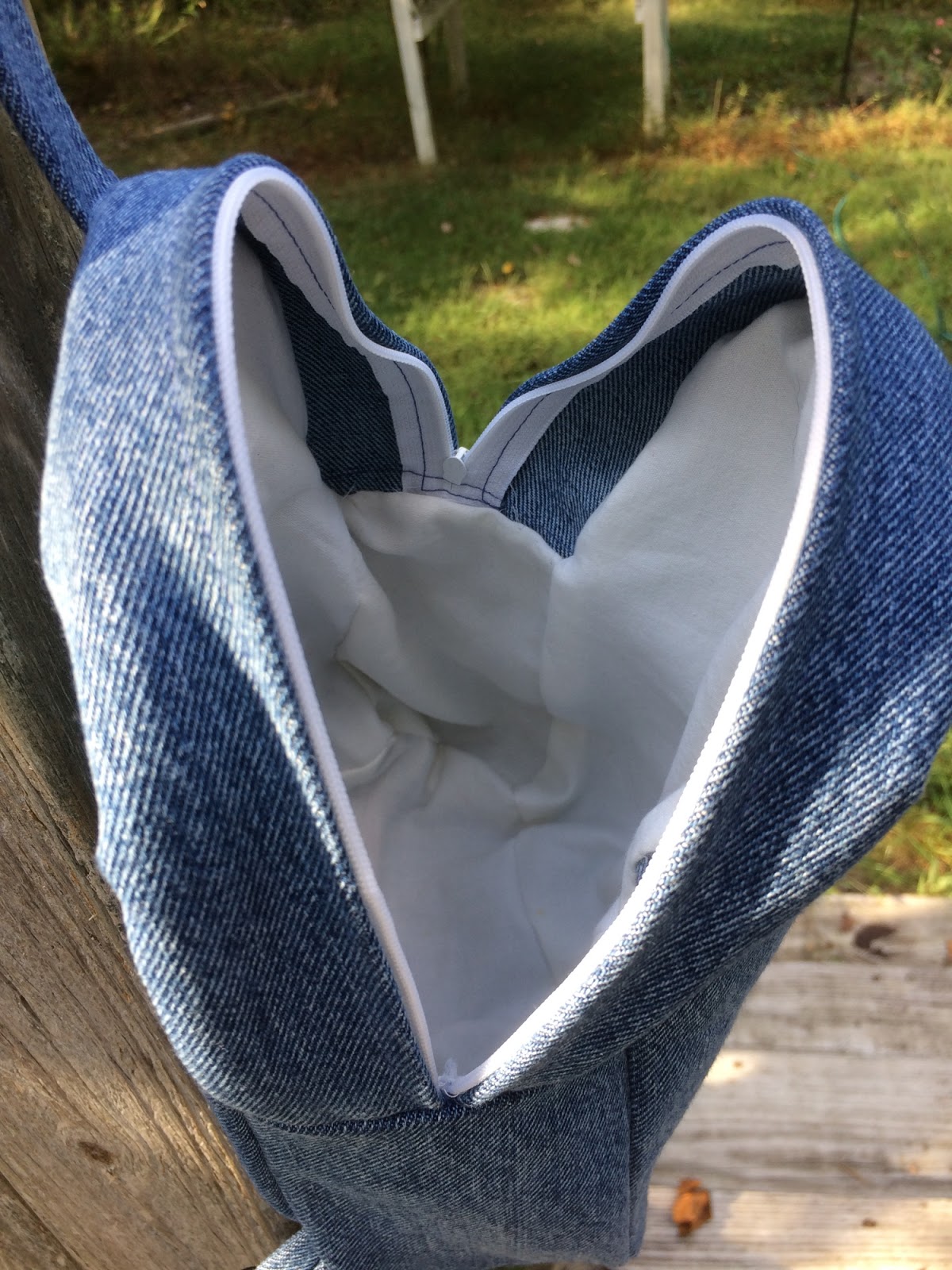
View of backpack lining.

The problems I ran into varied from the difficulty of dealing with heavy denim (thank goodness for the sewing machine with walking foot!) to problems with measurements to getting the adjustable strap hardware to work.
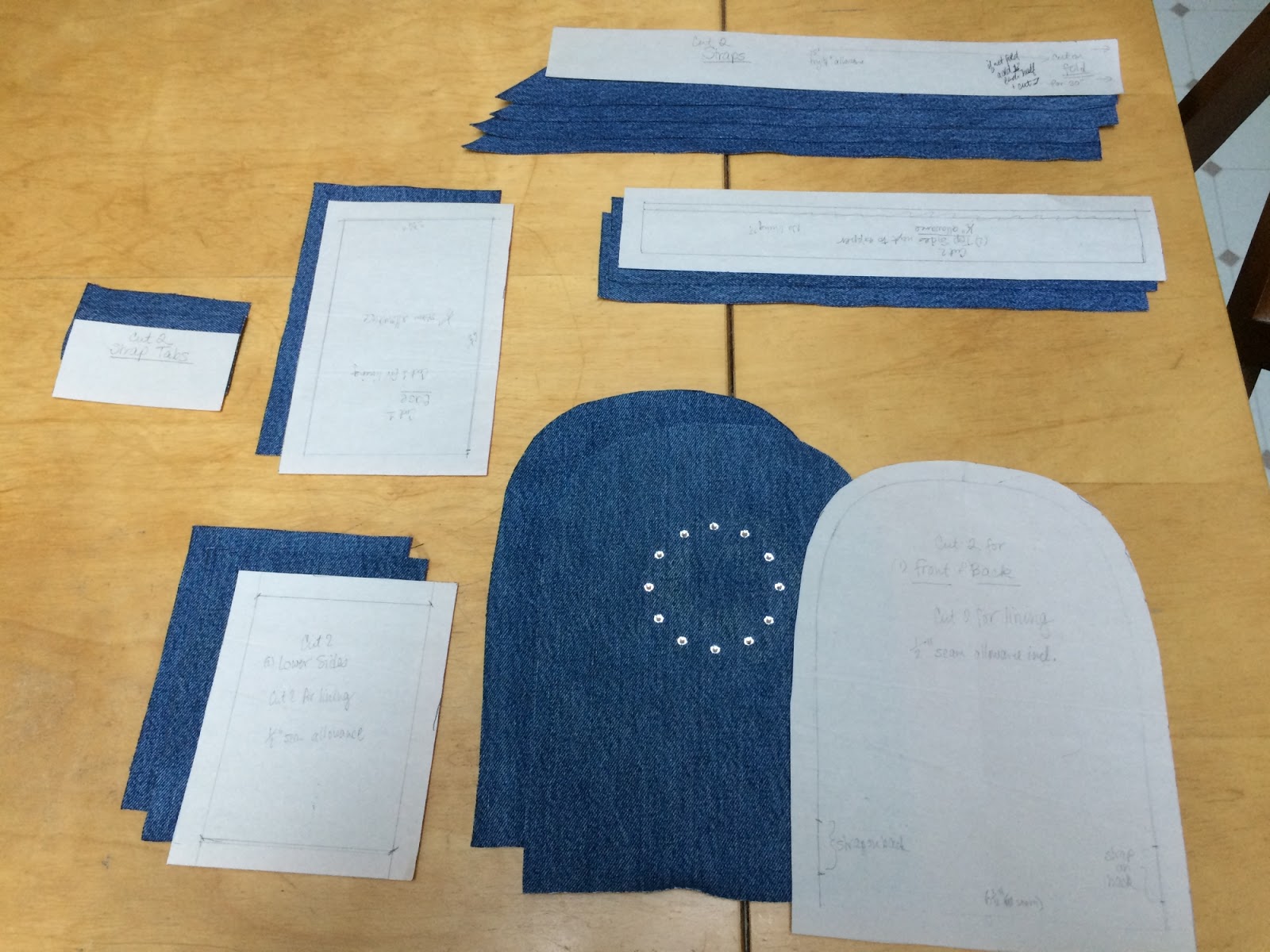
Some of these measurements are wrong.

That last problem had a lot to do with the straps being made of heavy denim. I couldn’t figure out a way to make them without a thick ridge running down the strap somewhere. I have an idea for next time, though. I think I’ll try folding the sides in and having them meet in the middle without actually sewing them to each other. There’ll be a thin gap running down the center of the strap, but if I zigzag the sides together, maybe it won’t be constantly bending in half.

The other thing I want to say about this bag is that it is mostly reused material. The denim came from old jeans, the lining from an old sheet, and the zipper was salvaged from one of those plastic zip bags that bedding and curtains often sold in. The plastic “string” was from our old string trimmer. The new materials were the strap hardware, some seam binding to encase the “string”, and the iron-on crystals decorating the front.

Till next post.
That Smells Good!–the changing appeal of scents, in and out of context

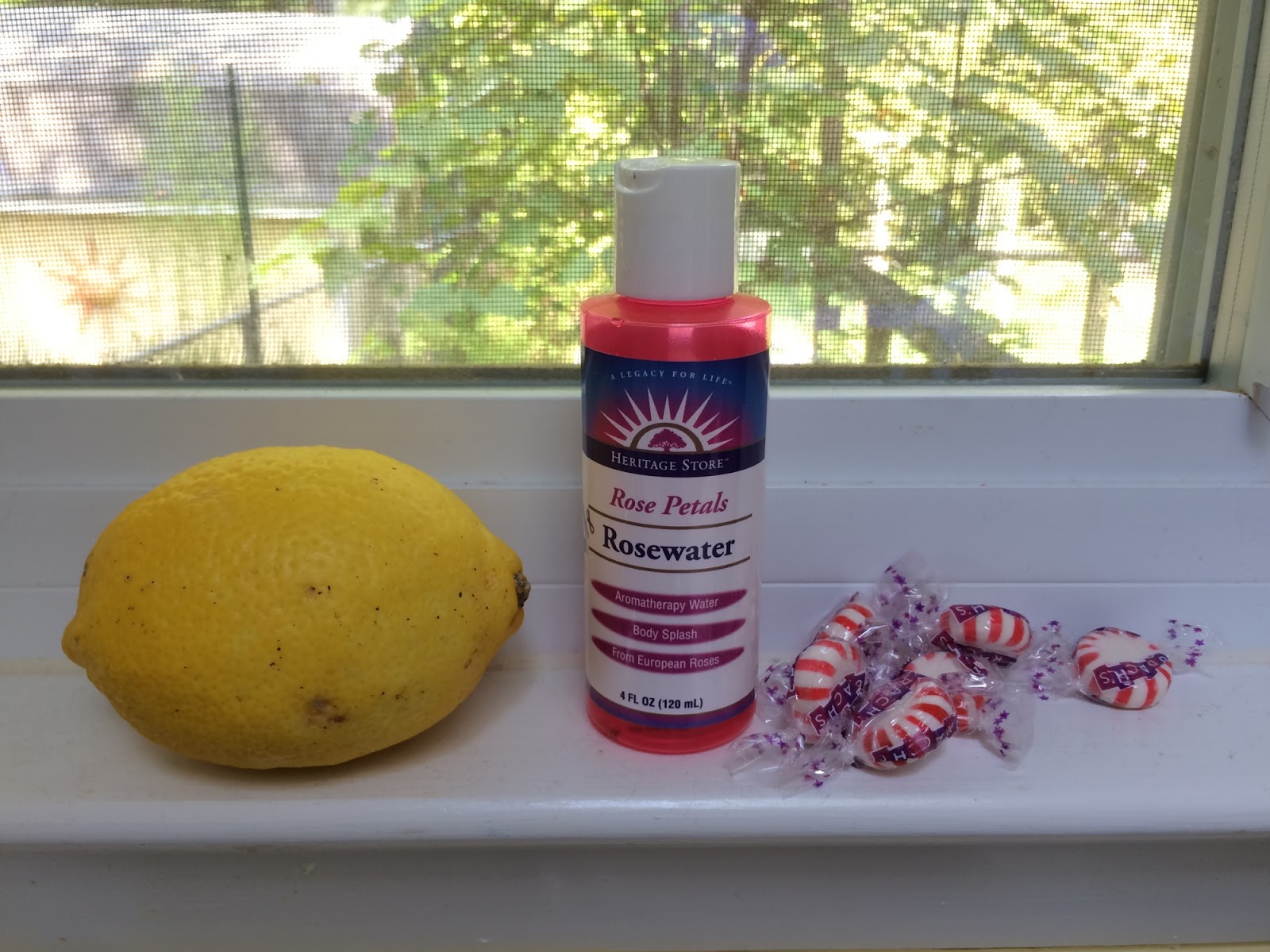
Windowsill display of lemon, rosewater, and peppermint candies

Peppermint, cinnamon, lemon–what do these scents have in common? Not much, considered strictly in terms of how they smell. One is minty, one is spicy, and the last one is citrusy. But they are all flavors as well, and I like them both as flavors and as fragrances.

That last connection isn’t automatic. Not every delicious food aroma is also good as a fragrance in its own right. For instance, the smell of chocolate–of brownies baking–is heavenly when I anticipate that I may get to eat some of them. Chocolate-scented stationery, however, does nothing for me. I’d rather perfume it with bergamot.

Oddly, I feel this distinction even more strongly when it comes to vanilla. I like the smell of vanilla in cookie dough or pudding, but I really dislike vanilla-scented candles, air fresheners, and heavily vanilla-based perfumes. Given how many of these vanilla-scented items are out there, I am clearly in the minority on this.

Most people (including me) would be reluctant to perfume their clothes or hair with the odor of sauteed onions and garlic. Onion-scented air-freshener? Ick. And yet, when I walk into the house and discover that the kitchen is fragrant with sauteed onions and garlic, my mouth waters and I say, “Wow, that smells good!” And it does. But only in the right context.

There are other fragrances that are pleasant so long as they aren’t in a food context. For some people, rose is one of these, while other people like rosewater-flavored desserts. I’m guessing that no one really wants their food to smell of lilacs or hyacinths, though, or Chanel No. 5. Bleah.

Is there any context that affects the appeal of a scent besides food? People do develop a familiarity with some scents in a cleaning context (lemon, peppermint), but nonetheless cleaning products do manage to be popular in a variety of other fragrances (floral, grapefruit, lavender, “sea salt”,…) Maybe personal fragrance–do we really want our bodies to smell like peppermint candy? Peppermint soaps and lotions certainly exist, but I’m having trouble imagining a perfume called “Fresh Mint Seduction” or “Lemon Heat”.

Can you think of any other contexts?

Till next post.

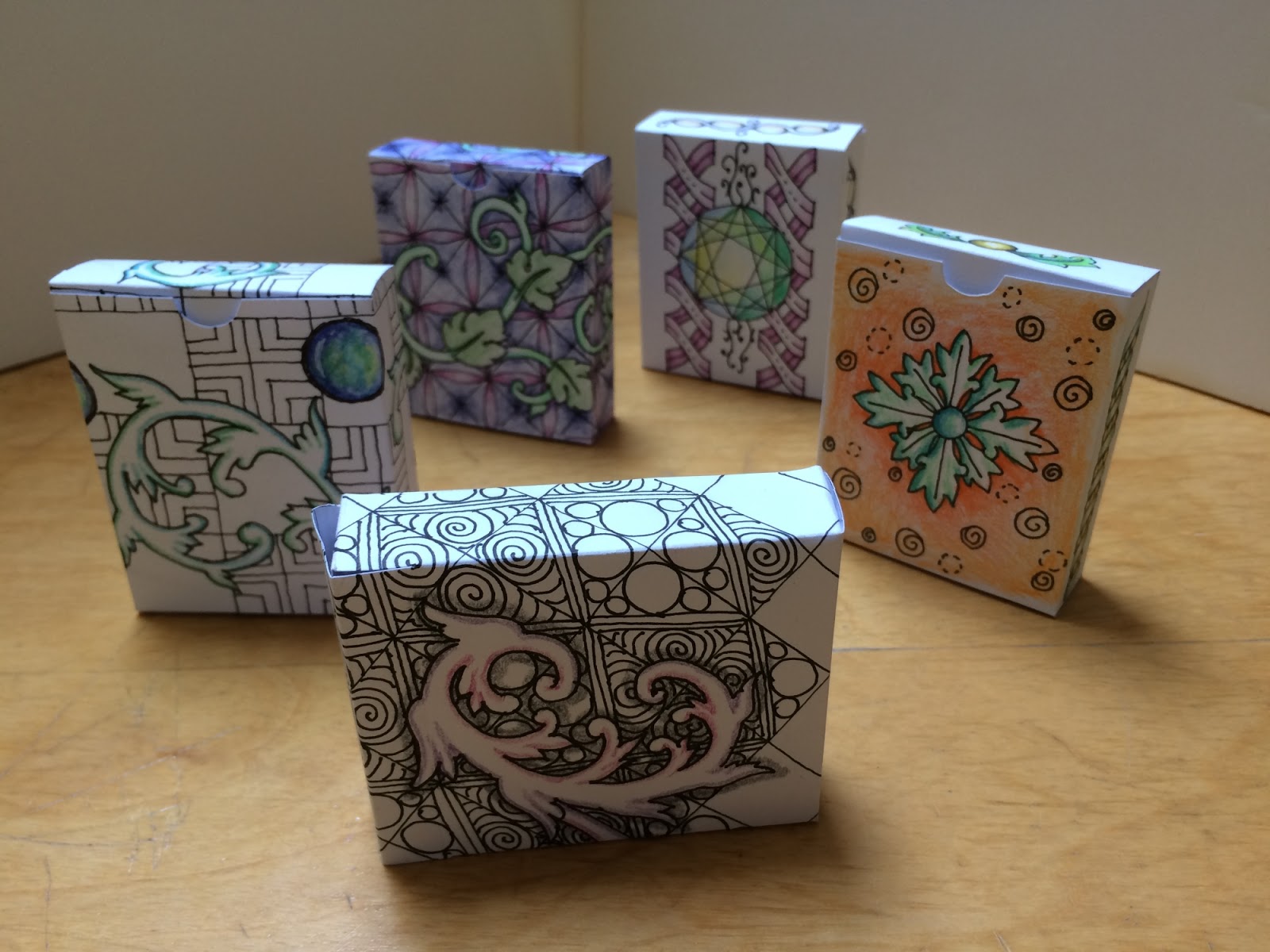
Decorating Boxes For Flashcards — Zentangle and ZIA on tuckboxes

Two books on language learning that I’ve read in the past several years (or has it been longer than that?) recommend using spaced repetition with flashcards. “Spaced repetition” means that so long as you are getting a word right, you increase the length of time before you review it again, while if you get it wrong, you shorten the interval. The Leitner system is a spaced repetition system. It is a list of days and levels of words to review on that day. When you review a word, if you get it right the word moves up a level; if you get it wrong, it moves down.

There are lots of on-line flashcard programs, but I like actual cards. Actual cards take up space, though, and need to be contained so cards at different levels don’t get mixed up. So I’ve been making tuckboxes for my flashcards out of cardstock and decorating them.

Tuck boxes for flashcards made from cardstock and decorated using Zentangle and ZIA
The earlier boxes.

I’ve discovered that you need more boxes for the later levels, as those cards accumulate while waiting to be moved up or down. Cards in level 1 get reviewed every day (if you’re being consistent about the system, which I admit I am not) and rapidly move to box 2, and fairly quickly to box 3. Cards start really piling up at level 4, which is only reviewed once a week or so.

Tuck boxes for flashcards made from cardstock and decorated using Zentangle and ZIA
Later boxes.

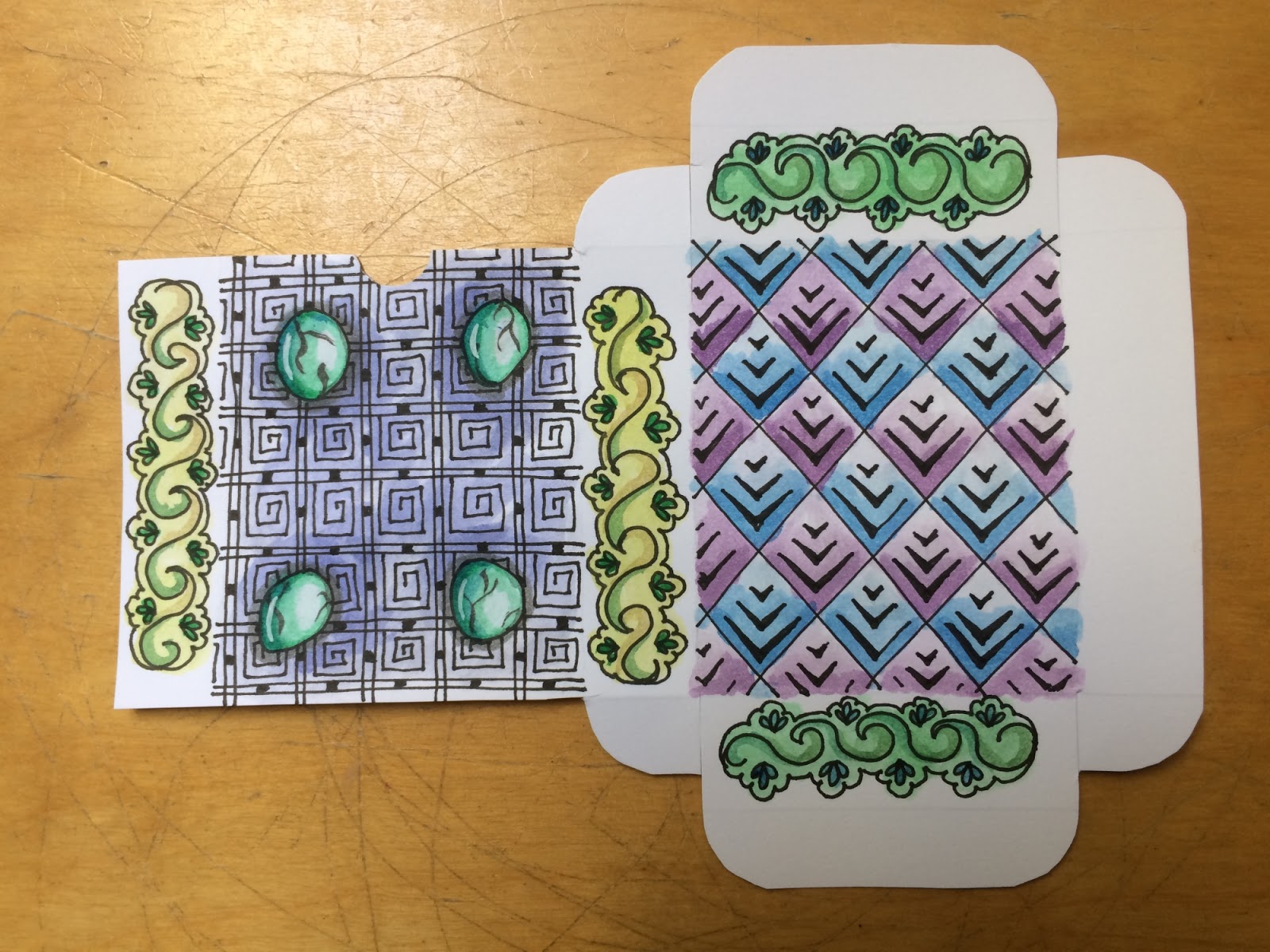
Although I’ve been using patterns from Zentangle (R), these designs are really Zentangle Inspired Art (ZIA) mixed with … whatever. I do use pencil guidelines for a number of these, especially the scrolls. I also use a lightbox so I can draw guidelines where the edges the template are on the other side of the paper. That way, I can decorate the box before I cut it out (especially helpful with watercolor.)

Decorated template of tuckbox for flashcards.
I already erased the pencil outline that shows me where the edges are.
Decorated template of tuckbox for flashcards.
A different box, cut out.

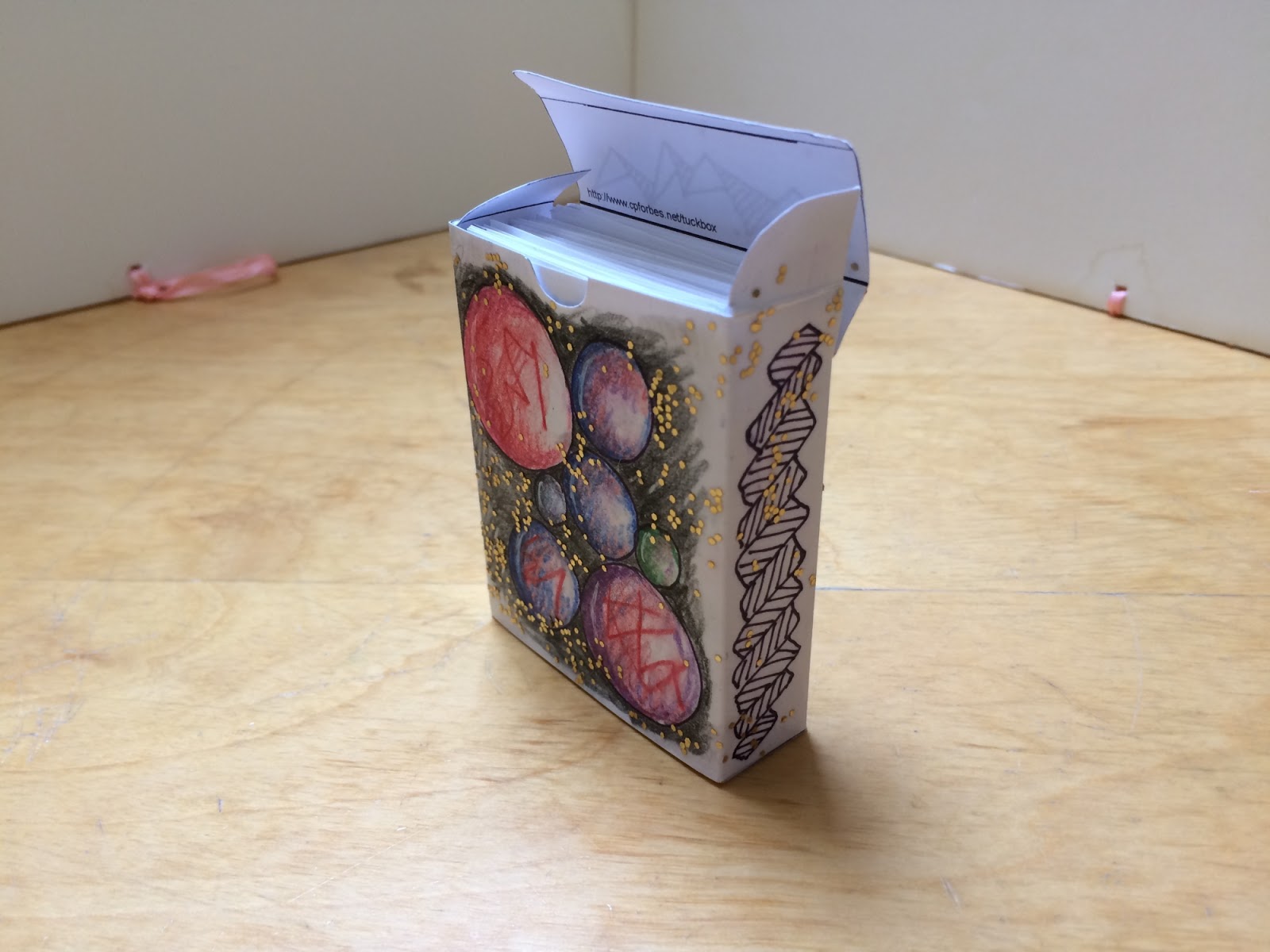
 I’ve been trying different media for coloring–Prismacolor pencils, watercolor pencils, and watercolor. One of the boxes is coated with ModPodge and glitter, which gives it an interesting feel.

Box for flashcards decorated with ModPodge and glitter
ModPodge and glitter.

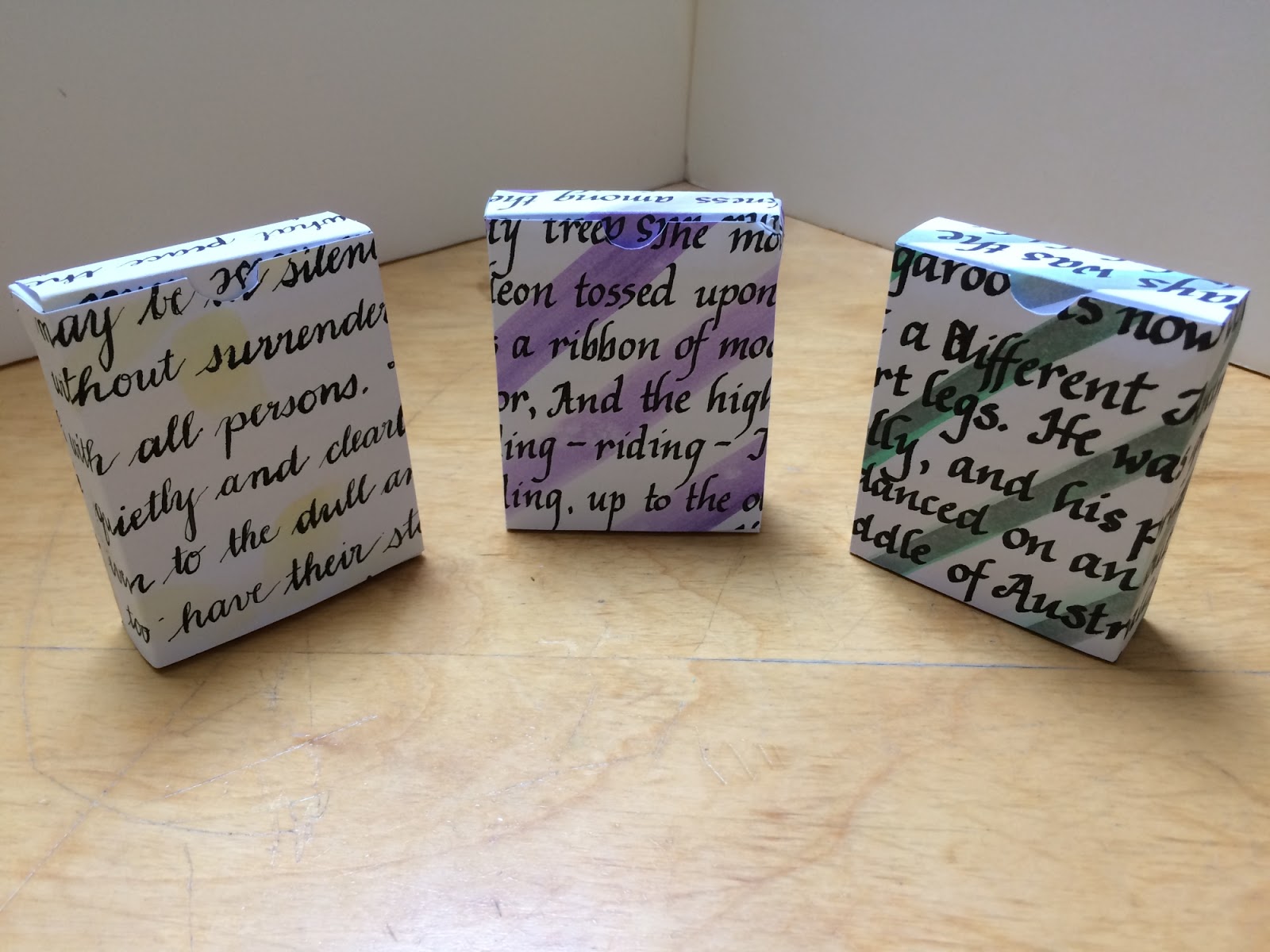
For three of the boxes, I wrote across the cardstock in calligraphy, then cut out the box. Can you identify the quotations?

Tuckboxes for flashcards decorated with calligraphy.
Boxes with calligraphy.

The template for these boxes was generated using Craig Forbes’ tuckbox template generator. (I am having difficulty getting to the webpage now–hope that changes.) You can choose the dimensions of your box to suit the size of your flashcards. Be careful to select “actual size” when printing them, or your boxes may be unexpectedly too small.

Box (tuckbox) for flashcards decorated with tangle patterns

Happy vocabulary practice!