Pottery, Paper, and Post–letters from the past and present

Recently, I’ve been watching some video lecture series from Great Courses—one on ancient Mesopotamia (“Ancient Mesopotamia: Life in the Cradle of Civilization”) and one on ancient North America (“Ancient Civilizations of North America.”) Between the two of them, I’ve been wondering: if our current civilization were completely wiped out (without wiping out humanity), what would remain for future archaeologists to interpret?
You see, I am struck by the importance of pottery in these archaeological finds. In the North American case, pottery was something that endured (along with stone tools) and which could depict activities and important symbols of the time, in the absence of the written word. In the case of Mesopotamia, pottery was also the medium for the written word itself—cuneiform on clay tablets.
The interesting result of this is that quite a lot of very ordinary writing done in ancient Mesopotamia got preserved when clay tablets and clay seals on items got caught in fires and were… fired. A lot of these tablets recorded inventories, transactions, and contracts, but sometimes letters were also preserved. A particularly interesting lecture discussed king Zimri-lim of Mari, his queen Shiptu, and his various daughters, some of whose correspondence was preserved when the palace at Mari was burned down.
As I understand it, the letters between Zimri-lim and Shiptu concerned the management of the kingdom while he was away fighting, and requests that she consult the gods (via the priests) on various questions. Letters from his daughters, whose marriages were arranged for political reasons, included news from their region and sometimes requests. Two daughters told him how unhappy they were, how badly treated, and pleaded for help. Apparently at least one attempt to help was made and failed.
Nearly four thousand years later, I’m feeling sorry for the two daughters. I only know of them because their letters happened to be preserved.
More recent “old” correspondence is preserved on paper. Paper is a lot more perishable than baked clay, but much lighter and more space-efficient, not to mention easy to write on. From letters, we get a window into the lives of many famous people of the less-distant past–those who wrote the letters, and those mentioned in the letters. A nice book about this is For the Love of Letters, by John O’Connell.
A lot of today’s correspondence is via email, which is much easier to “send”, takes up almost no space, and is simultaneously potentially eternal and yet entirely perishable. It is potentially eternal in that it lasts so long as the encoded information remains encoded in some medium somewhere. There is no original to be preserved. Yet it is entirely perishable in that the data must be stored somewhere, and machines and media can degrade. Also, formats for files keep changing, so either the format must be updated as necessary or the old software must be maintained.
So if civilization as we currently know it were destroyed? The computers would no longer have power. Eventually, their parts would corrode. Even if future archaeologists could build a suitable device to read the old hard drives, the data would probably no longer be readable.
Some paper correspondence might last longer, if protected from moisture and pests in a vault. I assume paper would become exceedingly delicate over time, just as textiles in well-preserved ancient sites are delicate, and most of it would eventually decay.
And then there’s pottery. We think of pottery as fragile, so we make more use of other materials. Wood, metal, and plastic tend to be less breakable, and are usually lighter in weight as well. And yet… pottery endures. It doesn’t rot, it doesn’t rust, and it doesn’t degrade in strange and somewhat unpredictable ways as old plastics (which are less than a century old!) are now doing.
We don’t use pottery for many purposes, outside of the kitchen and the garden. So maybe those future archaeologists would conclude that our most important everyday thoughts were of  “Home Sweet Home”, “World’s Best Dad”, and “Flour,” “Sugar,” and “Tea.”
Till next post.

The Many and Varied Versions of Sherlock Holmes

At some point when I was growing up, my mother bought a big red volume of the collected Sherlock Holmes stories, with original illustrations from the Strand magazine. I think this was after my introduction to Holmes at school. We read “The Speckled Band” written as a play. For the rest of the year, my earlier night-time fears of giant rats (a result of reading The Tale of Samuel Whiskers Tom Kitten, by Beatrix Potter) were replaced by the worry that a poisonous snake might somehow find its way into my bedroom.
That didn’t stop me from reading The Complete Sherlock Holmes Treasury. I would guess that I read most of the stories at one point or another, including “The Adventure of the Speckled Band.”
Obviously I’m not the only person to be fascinated by a sleuth who can deduce from a man’s hands and sleeves his work history and worries. Sherlock Holmes is familiar even to people who haven’t read the stories, and many movies have been made based on the stories, set in different time periods. (Rather like Shakespeare’s plays.) There is even a mouse version of Sherlock, complete with deerstalker cap.
My favorite is probably BBC’s “Sherlock”, a modern-day version that is funny and clever and makes interesting use of, and reference to, the original stories without adhering to any of them. Holmes’ deductions concerning a pocket-watch become deductions based on a cell phone. Instead of the street urchins known as the Baker Street Irregulars, there is a network of homeless people to pass him information.
The Sherlock Holmes movies with Robert Downy, Jr. are also good. These use the original time period, rather than modern times. While BBC’s Sherlock makes much use of deduction and Holmes’ boredom-related drug habits, the Robert Downy version adds a bit more of Holmes’ strength in fighting and skill at disguise.
Recently I’ve been enjoying the old movies with Basil Rathbone, which I hadn’t seen before. The time periods vary. Some seem to be set in the London of hansom cabs, while others are set in a World War II period and have cars. At least one tries to follow one of the original stories—“The Hound of the Baskervilles.” In these, as in the others, I love hearing familiar lines crop up. (“Mr. Holmes, they were the footprints of a gigantic hound!”)
These earlier movies did draw my attention to the fact that the Sherlock Holmes of later versions is much more of a “wounded hero” as compared to the Basil Rathbone version or, in fact, the original Sherlock. Rathbone’s Sherlock is perfectly capable of social courtesy, even if he is not much interested in it, and even urbane at times. The original Sherlock, though he is described as scorning emotions as an intrusion on reason, behaves with courtesy and even kindness toward his clients (especially women). The later Sherlocks seem more controlled by their emotions–or the absence thereof—and warped by them. It makes them very interesting, but there is still something to be said for a more heroic version of Sherlock.
The original Sherlock Holmes stories do betray their age at times with old stereotypes and prejudices, and they should be read with this in mind. But it’s worth going back to the source–the stories of this sleuth for whom the most obscure deductions are “elementary”—and it makes the subsequent versions feel that much richer when you catch the allusions to the original.
Till next post.
“Look at the thousands of scratches all round the hole—marks where the key has slipped. What sober man’s key could have scored those grooves? But you will never see a drunkard’s watch without them.”
The Sign of Four
“’Quite so, madam,” said Holmes, in his soothing way. ‘I have no doubt that you have been annoyed more than enough already over this business.’”
–“The Adventure of the Cardboard Box”
“Grit in a sensitive instrument, or a crack in one of his own high-power lenses, would not be more disturbing than a strong emotion in a nature such as his.”
–“A Scandal in Bohemia”

Who Designs This Stuff?–the impressive origami of modern packaging

Like many people, we purchase way too many things that come packaged in one sort of cardboard box or another. Boxes pile up and have to be recycled, since we only have need for a few to use for this and that. As a result, every so often I spend time breaking down cardboard boxes so I can fit them neatly into the trunk of my car… and sometimes I am surprised at the ingenuity of the packaging.

Most of the standard shipping boxes are held together with tape, but boxes that were designed to hold a specific product–something electronic, perhaps–are often folded into shape and can be unfolded and flattened without cutting any tape at all. (Like a pizza box.) Not only that, but sometimes the inserts are also just cleverly folded cardboard, designed to hold a particular shape of product securely during shipping.

Who comes up with this stuff? How do they do it? I imagine the packaging engineers must have a whole repertoire of standard folded box templates. Then, when assigned to make a package for some assortments of product and parts, they tweak them. Surely there’s a computer program involved, too. (Maybe it measures how much cardboard different potential packaging solutions would require.)

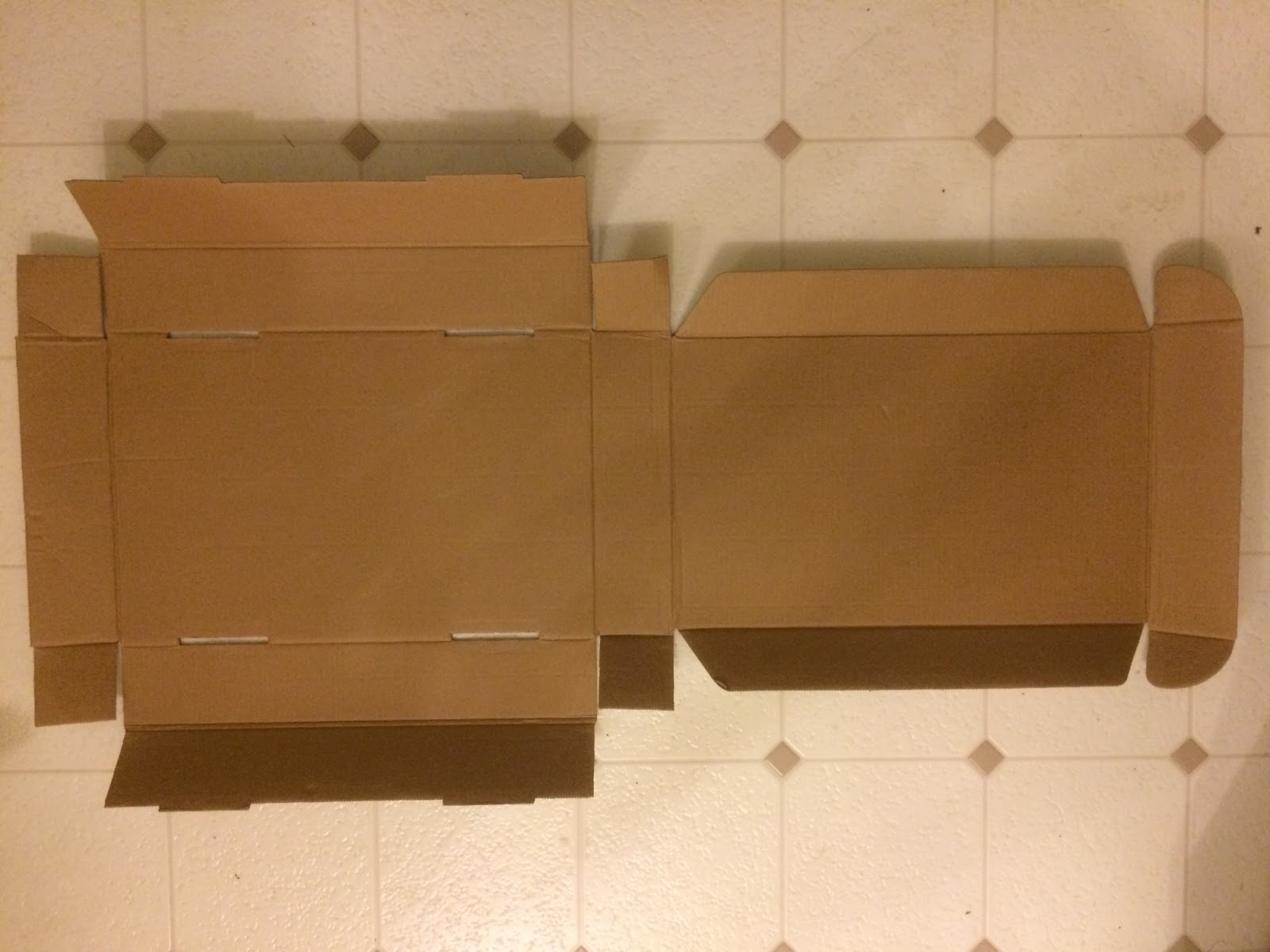
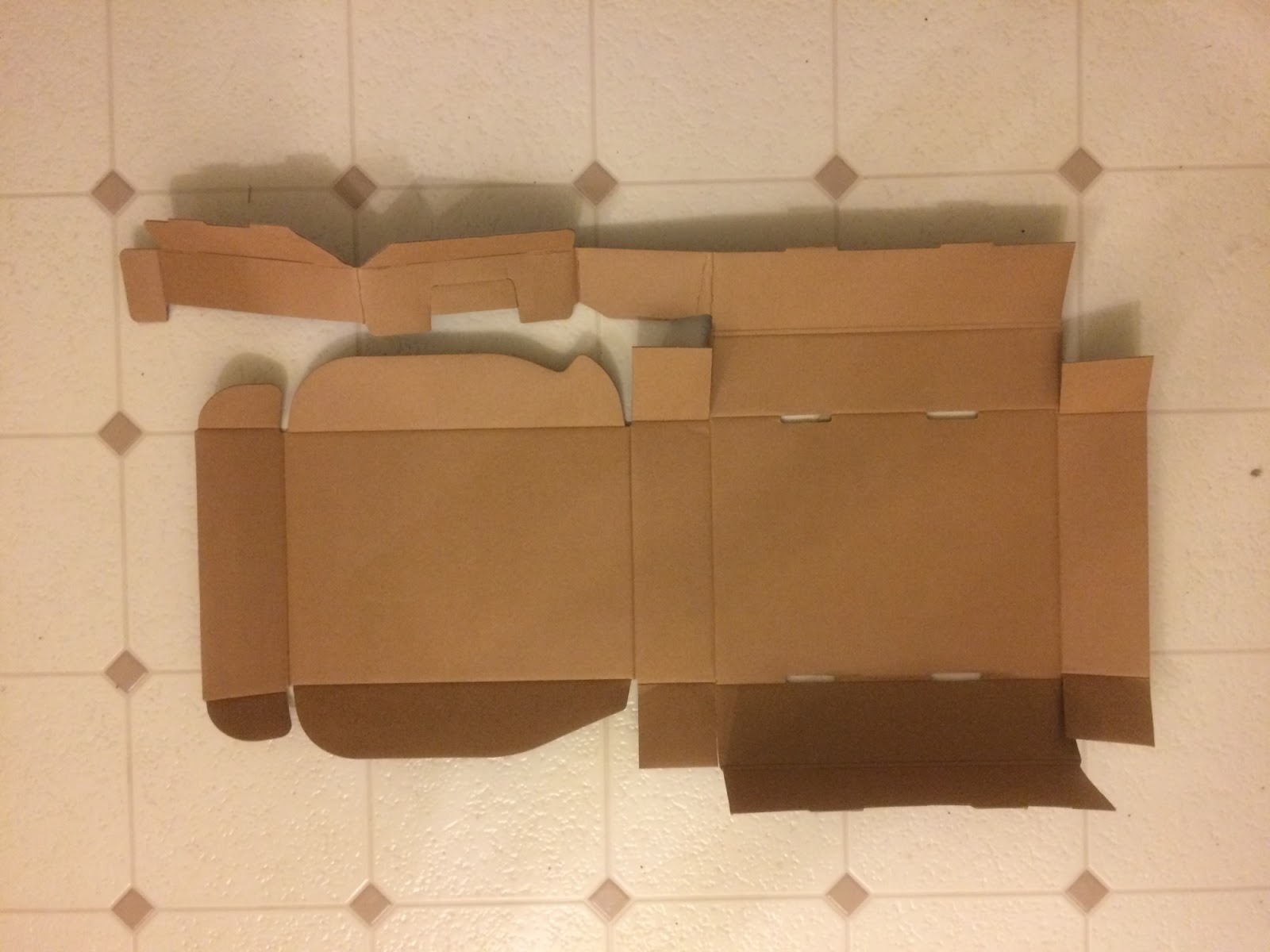
But really I don’t know anything about how they do it. I just know that a lot of ingenuity apparently went into these pieces of cardboard that I am about to recycle, and so, in appreciation, I took a few photos recently to offer as samples.

I think this one had a lid with tabs.
Box with fold-over lid with tabs.
See the attached insert on this box. I’m not sure what it held.

I wish I had taken photos of some of the more elaborate folded inserts I’ve seen, and also photos of the “before” stage–when they were still boxes and compartments and oddly shaped cradles for cables.

Till next post.