Woodsmoke, Kayaks, and My Dad

Last weekend, my daughter camped out with other members of her mountain bike team on the night before the race. We dropped her off at the campsite before heading for our own, cozy hotel room.
The family camping area was packed to capacity. Kids ran around yelling; someone had a campfire going. The trees, the smell of woodsmoke, and the noise brought me back to the times my dad took us all camping, and my brother and I were the ones running around playing loud games. I vaguely recall helping out with the tent—something about poles that fit inside each other, perhaps matched by color? Sleeping bags, of course, and maybe air mattresses that had to be blown up? And Cutter’s, of course, to keep off the mosquitoes.
You can tell I didn’t really take to camping, since I haven’t camped for years. Still, standing there smelling the woodsmoke, I thought about my dad and was glad that he had taken us.
I thought about my dad a month or so earlier as well, when my daughter was going kayaking with members of Boat Club.  They needed another adult on the water. So I rented a plastic kayak along with the others and got in awkwardly. Once on the water, though, I really enjoyed it. I watched the kids messing around and wished that my dad could be there to see his granddaughter on the water—and to paddle his own kayak again.
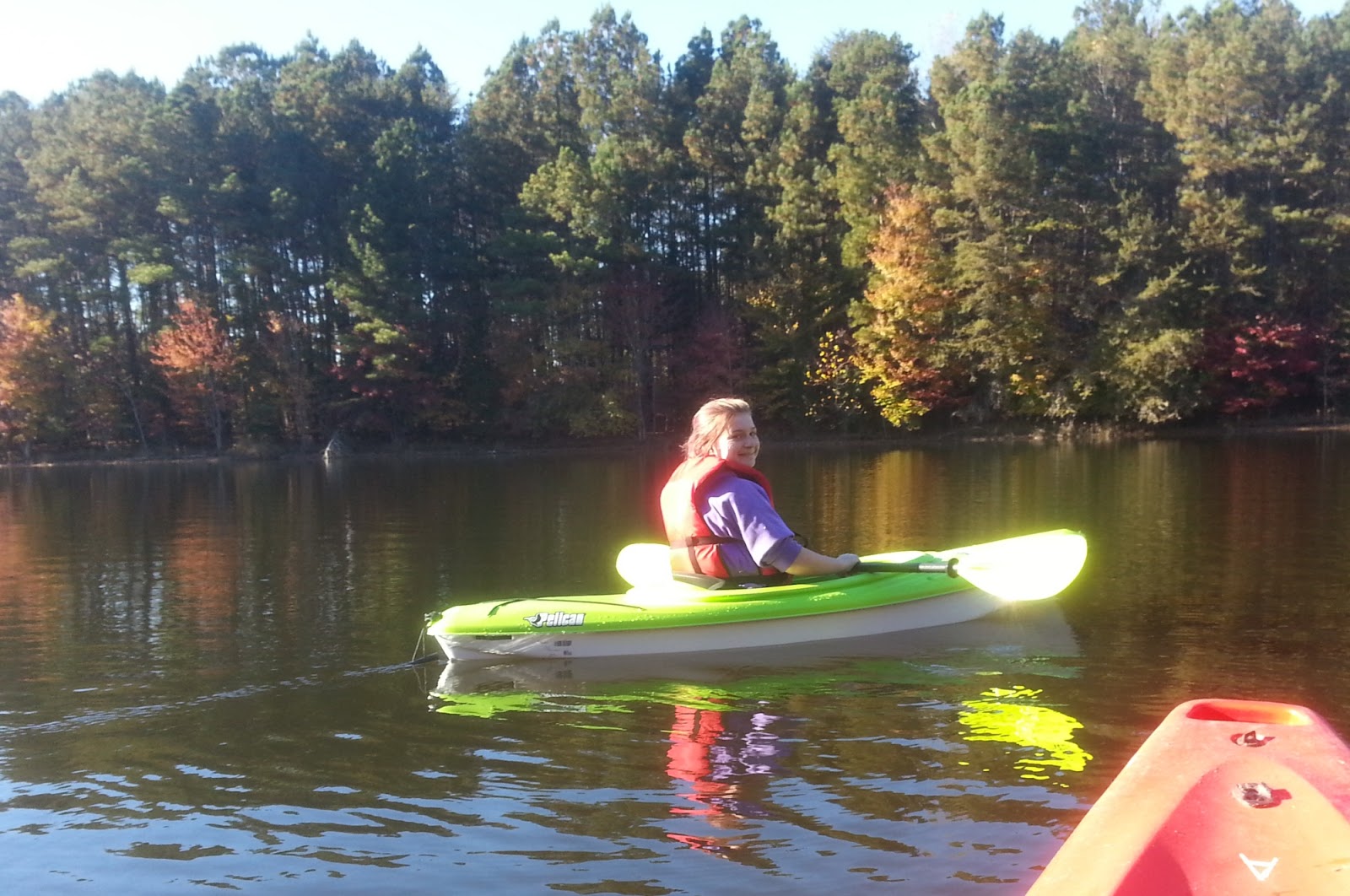
Girl in plastic kayak
M out on the water in her kayak
I remember helping him put together the kayak when I was a kid. It came in several heavy canvas bags. Wooden pieces had to be slotted together, poles had to be inserted along the sides, and then the two ends had to be pushed into the rubberized hull before they could be locked together and the seat backs put in place.
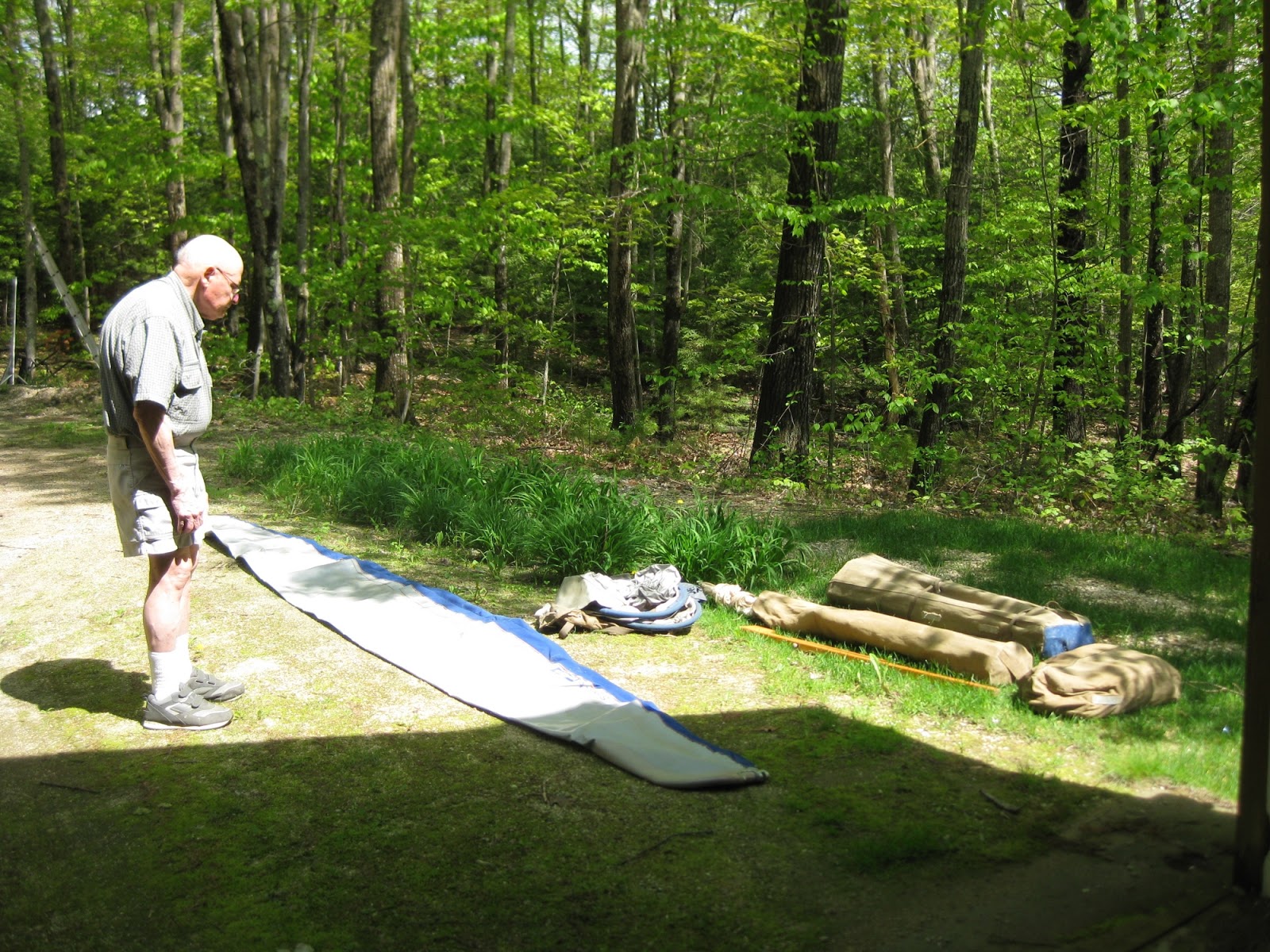
Collapsible kayak Klepper Aerius in bags
Taking a last look at the Klepper Aerius.
Then we would go out on the quiet lake and paddle around the edges. 
There are other things I learned from my dad. He liked to make things, sometimes from kits. I remember a down parka, a paper clock with a pendulum, and of course the electric organ, which took forever with all those wires to solder. I learned some basic skills from him as he carried out his projects—how to use the sewing machine, and how to cut and score paper. (I didn’t get into electronics, though he let me try soldering some wires.)
He also had a great interest in the latest technology and insisted on getting a computer back when it seemed like a crazy idea. I mean, who had a computer in their home?
But he got a Sinclair and it had so little memory that you could easily type in a Basic program and run out of room before you were done. And what do you know—he was right about computers being interesting. Now everyone has one.
He liked to garden as well, but since he also liked to travel and we moved every two years, his gardening was limited. I, on the other hand, was determined to live in one place when I grew up and have a really nice garden. But we shared a love of home-grown tomatoes. I always try to have tomato plants, even in years when the rest of the garden is in sad shape.
Girl in front of light-box with lettuces and other plants
Me as a kid in front of his light-box for growing plants
Light-box made from wire shelving with cardboard and foil for starting seedlings
My own attempt at a light-box for starting plants
There were things my dad didn’t like, certainly. He was scornful of “ya-ya music”, which is what he called rock, and probably most music that followed it. (Did he get the term from the Beatles’ song “I love you, yeah, yeah, yeah, I love you, yeah, yeah, yeah”?) He abhorred the practice of having a TV in the living room (never in our house) or watching TV during meals. Really, he disliked most TV shows except documentaries.
And he could have the most irritating little smirk when he felt he was winning an argument.
Overall though, he had a lot of enthusiasm and a lot of interests. I wish that he could be here to share them with his granddaughter.

"Flowers or Vegetables?"–reasoning about gardening

 Some years back, I heard a fellow gardener say that she only grew flowers, never vegetables. “I can get all the vegetables I want at the farmer’s market,” she said, “so why waste garden space?”

Her reasoning caught my attention then, and I am still thinking about it even now . “Flowers or vegetables?” is an important question for a gardener.  Plenty of gardeners–maybe even the majority–grow both. But some gardeners are mainly interested in creating a beautiful landscape, while others think flowers are a waste of space since you can’t eat them. (At least, not most of them, and not in a very sustaining way.)
I belong to the “both” school. I love flowers, but I can’t imagine having a garden without growing some tomatoes, maybe some carrots, certainly basil and parsley. When I browse seed catalogs, I spend at least as much time contemplating the enormous range of possible lettuces, sizes of carrots, varied summer squash and of course tomatoes, as I do looking at photos of zinnias, violas, and sweet peas (so lovely and so unsuited to my climate.)
Why grow vegetables? As my fellow gardener pointed out, I do live in a town with a flourishing farmer’s market. Most of the vegetables I grow (at least the ones I grow successfully), I could buy. They offer plenty of heirloom tomatoes, cute squash, leafy greens and so on. They sell beautiful green bouquets of basil. Most of their vegetables look better than mine, and I could pick and choose the ones I want.
I asked a similar question earlier about making homemade French bread. I can buy better French bread locally, so why make it? But I don’t think the answer is the same in the two cases. With French bread, I make it in large part for the challenge of the thing. I don’t grow vegetables for the challenge of it. In fact, I prefer vegetables that are easy to grow and don’t require much fuss.
Do I grow my own vegetables so I can get them exactly the way I want, as in the case of making myself a pair of lightweight green corduroy pants with double pleats? Or the time I tried to manufacture a grocery bag that was washable and yet would stay open easily?
There is certainly an element of choice. When I grow my own vegetables, I can choose unusual varieties that aren’t offered at the Farmer’s Market. Getting to choose is certainly what keeps me browsing seed catalogs through the winter.
However, some of the varieties I grow are available at the Farmer’s Market. Every year I plant a couple of Sungold tomatoes, even though I can buy the little orange globes by the pint. And while I’ve experimented with different kinds of basil, I’ve discovered that when I’m cooking I actually prefer plain, basic basil. As a result, that’s mostly what I grow now.
For some of the vegetables, and especially for the herbs, it is helpful to be able to go out back and pick just what I need, when I need it. A few leaves of basil, some sprigs of parsley, just enough lettuce for a salad. In fact, I should probably keep this in mind when planning and give priority to plants that don’t store well or are used in small quantities.
So why grow any other vegetables?
The answer, I think, is that there is just something very appealing about growing some of my own food. It’s the feeling of providing for myself–even if, in truth,  I’ve got hardly enough for one meal. It feels (ironically) deeply practical. This is probably the reason I keep planting fruit trees and bushes, even though the squirrels and birds make off with most of it. I could plant purely ornamental trees, but I like the thought of producing fruit in my own backyard.
Hyacinths may feed the soul, but peach trees feed the stomach as well. (Or, given squirrel thievery, maybe just the imagination.)
Till next post.

Growing Out Violas–a past foray into plant selection

Back in 2007-2010, I was intrigued by violas, those smaller cousins of the pansy. They come in such a variety of colors and patterns (though not quite as many colors as pansies), and their flowers, though smaller than pansies, are more numerous and less liable to flop over.

They have the additional feature that in this climate, one can plant them in fall and they often survive the winter and bloom again beautifully in spring. (They don’t survive the summer–whether due to heat or the natural limits of their lifespan I’m still not sure.)

If you don’t deadhead them, many will form seedpods after blooming, and for some reason I decided to save seeds with the idea of selecting for interesting flowers in the next generation. I didn’t actually try to cross flowers with each other–that would have required a much greater level of effort. I just picked interesting plants and saved seeds from them in small labeled envelopes.

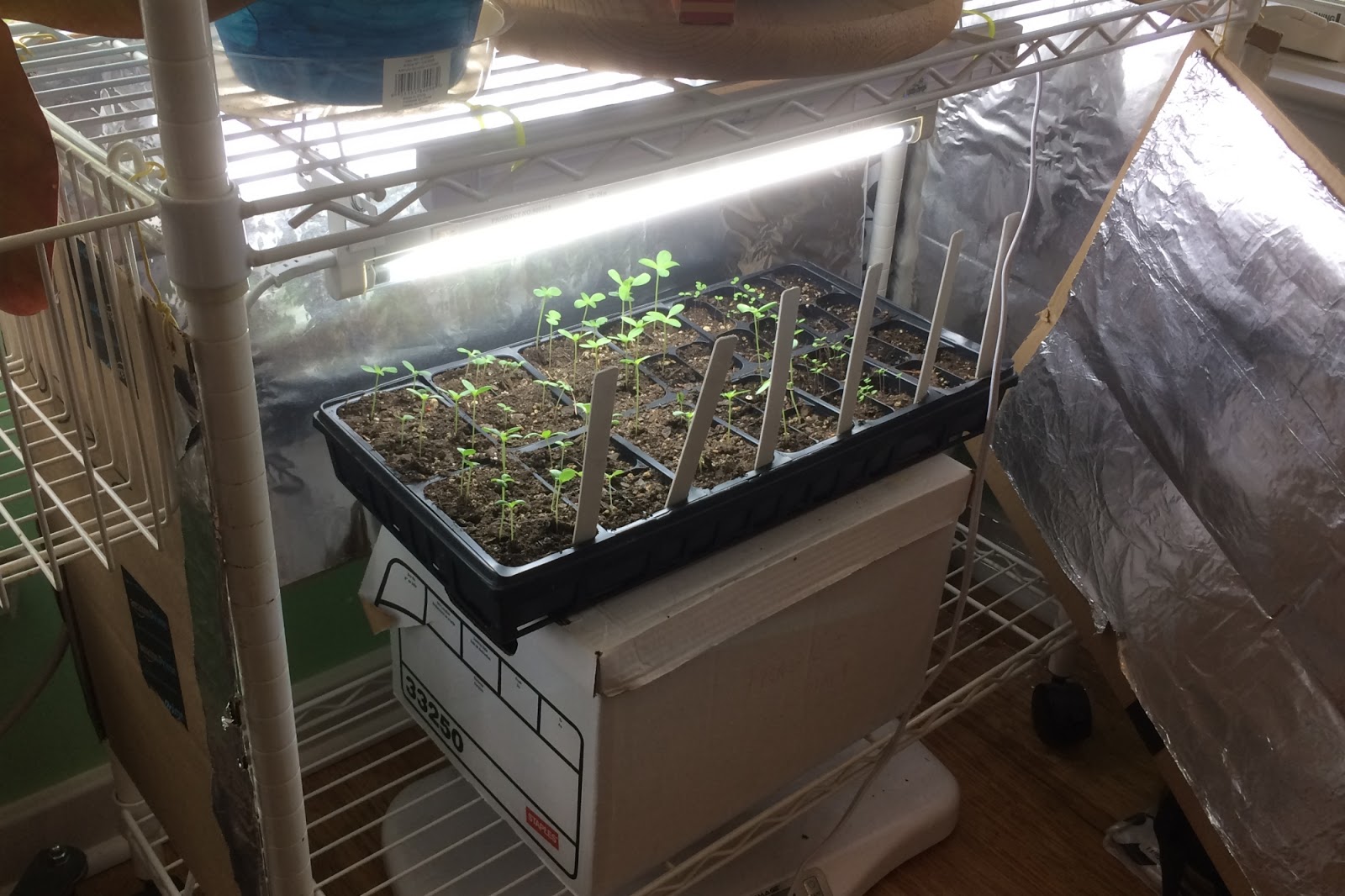
Trays of viola seedlings just starting to bloom.

Then I planted them out. In 2010 I planted quite a lot of them. (Were all these saved seeds? Did I really get some flowers that were so dark?)

It was fun seeing what colors showed up. The yellow ones, as I recall, tended to produce just yellow offspring, and the one called “Peach Frost” also seemed to produce more like itself.

“Peach Frost”, I think.

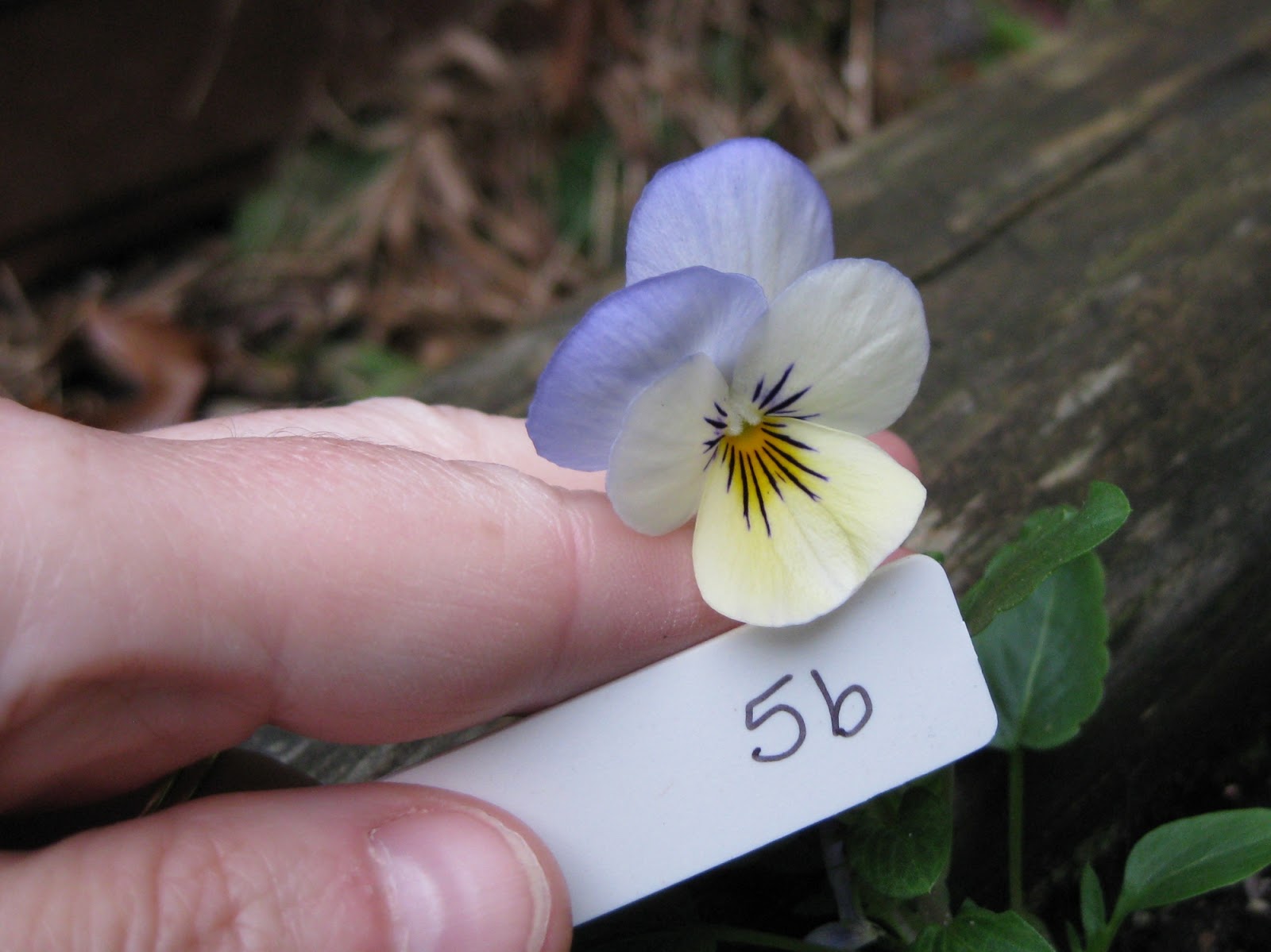
Unfortunately, as I look back at what passes for a Garden Log, I discover that I kept terrible notes. No system. What did “5b” mean? Did I just pick some viola, whether something I bought or a random volunteer (I got quite a few volunteers) and give it a number? Or was “5” its parent? Was I just trying to label the picture for the next year’s seed?

The mysterious “5b”.

The other problem was that I really didn’t have anything to aim for. No special color that isn’t already easily available, and as for patterns… as far as I can tell, blue-and-cream combinations depend greatly on time, temperature, or both. A viola that looks fabulous at first can have very boring flowers later in the season and vice versa. A nice-looking bloom can change as it ages, getting more or less interesting as it does. So while I picked flowers that I liked, I had no basis for selecting among their offspring.

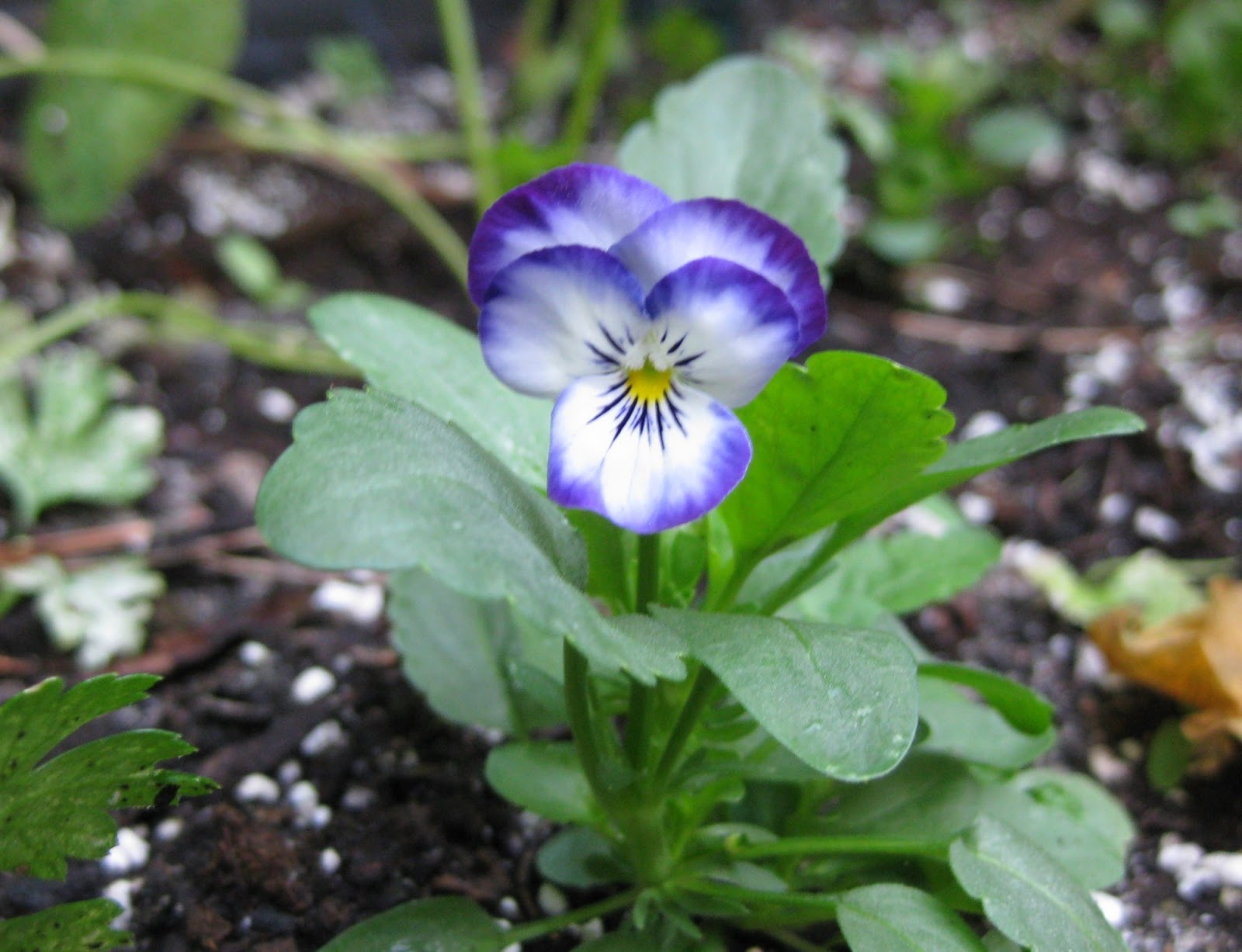
An interesting purple-and-white combination–for now.

I did try, briefly, to evaluate the scent of the violas, since I like fragrant flowers. I bought varieties that were supposed to have some fragrance, and checked to see if I liked them. But even when violas have a fragrance, it’s pretty mild. And it’s hard to smell a flower that’s so close to the ground.

To top it off, perceived fragrance varies with the temperature and maybe some other conditions as well. I know this is the case because I choose roses as much by fragrance as by appearance, and I have to keep in mind that some days I can hardly smell anything from even moderately fragrant roses, while other days the scents are much more pronounced. (I think individuals also vary in how well they perceive specific scents. No wonder catalog descriptions are so useless when it comes to fragrance.)

Looking back on my foray into viola selection, I rather miss the excitement of seeing that first flower and comparing it to its parent (the known parent). Maybe I should plant violas from saved seed again, even if I’m only doing it from idle curiosity. But first, I’ll need to save some seeds.

I guess that’s as good a reason as any to buy more plants this fall.

Till next post.