“I’m a little teapot, here’s my spout”–a close-up of a family teapot

Above is a photo of the family teapot.

This is the teapot that traveled with my family since… I’m not sure when my parents bought it, but I’m currently sifting through family photos so possibly I will have a better answer later on. The steel part is a sort of tea cozy that fits over the plain white pot. No need to worry about the lid tipping off when you pour.

I love tea paraphernalia, and I have several teapots of my own. Some are inherited (silver with scallops, white with blue-and-gold); some were chosen (spring green, spring flowers). I like teapots with pretty designs or in appealing colors. I don’t like pots that are made to look like something else, such as a cake or a rabbit. That just isn’t my thing. I do like some teapots with simple, modern shapes, like this one. But there’s also one other important thing.

It has to pour well.

You’d think this would be required for any teapot, but I guess a lot of the really decorative teapots are bought by collectors and don’t get much use. (Mine don’t get much use, and I only have seven or eight! Imagine trying to use all of forty or so teapots!)

What makes a teapot pour well? I don’t know the answer. I do know that my parents’ teapot has a very unusual spout, and I can only assume it was meant to help it pour. I had never really looked at it, despite all those home-for-break teatimes, until now.
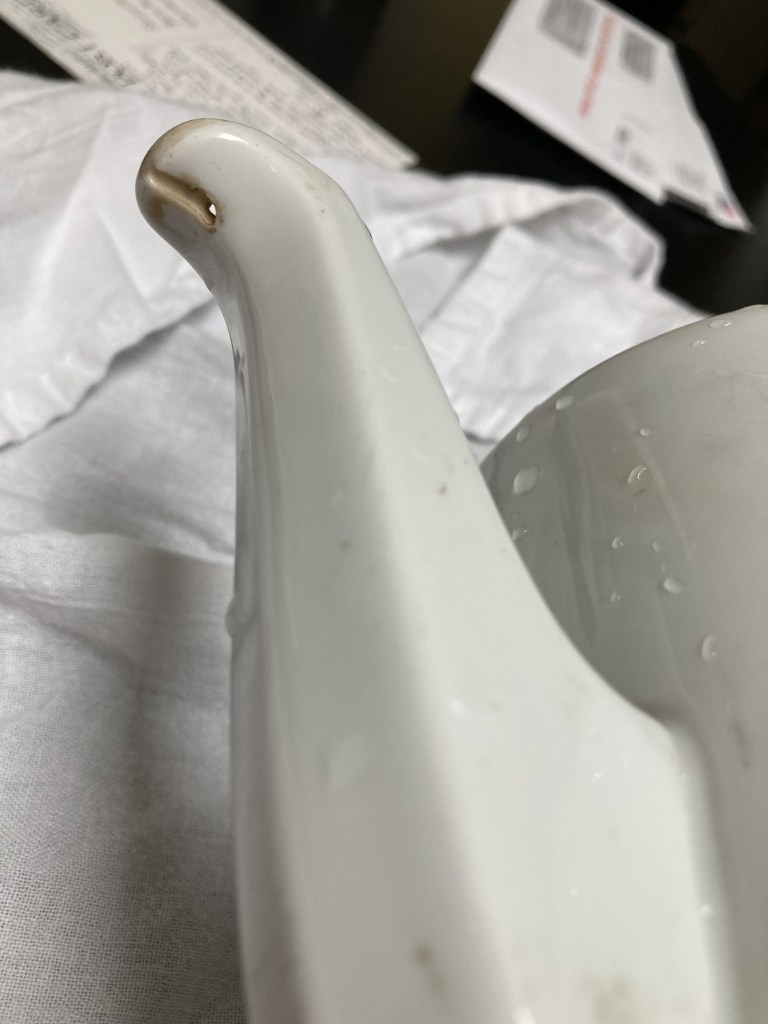
As you can see, there’s a small channel that runs down from the tip of the spout, and it is pierced.

And there’s a channel inside the spout that starts right at the hole. Is the drip meant to go back inside? Does this actually work? Did someone really do all this work to create a teapot that doesn’t drip? Surely this is more than is required.
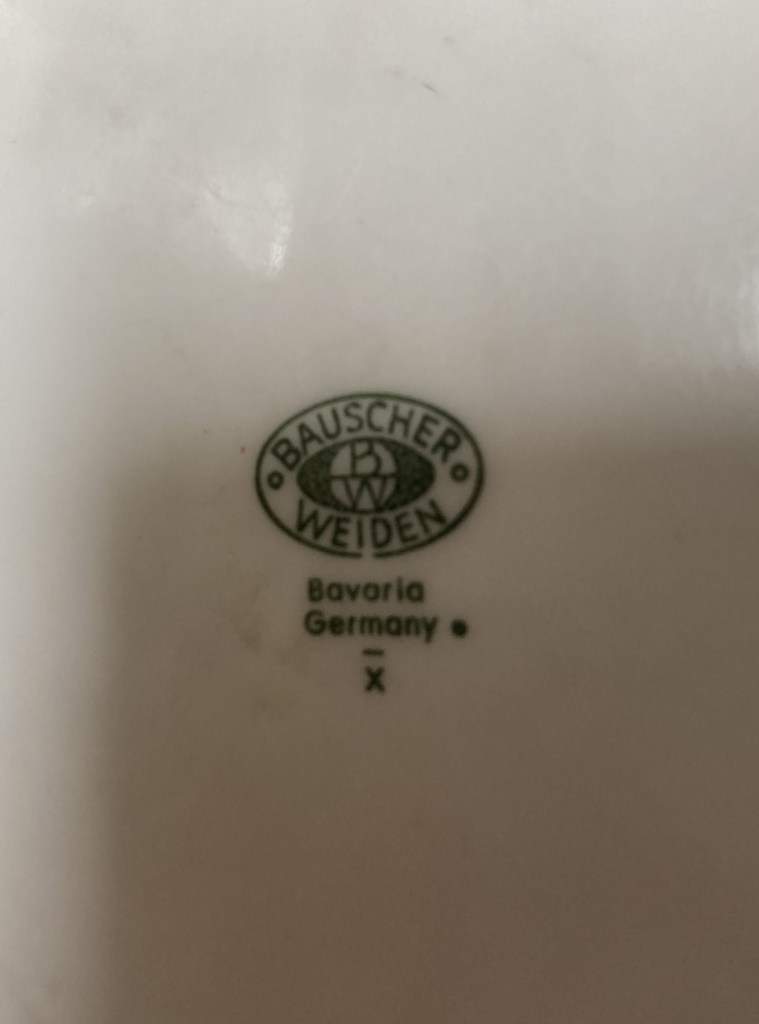
I just looked up this company. It appears that other pouring vessels they made in the past, such as coffeepots, did have pierced spouts. I couldn’t find out if this was true of their current products. I would love to read more about this feature, how it compares to other spout shapes, and who came up with it. Maybe someone out there can point me to an article?

Till next tea-time–and next post.

Why I Drink So Much Tea


I drink rather a lot of tea. I start the day with a cup of tea, and then maybe another, probably one around lunch time, and when four o’clock slips around, well… that’s tea time, isn’t it? I’m talking about black tea, by the way, with milk and sugar. I’ve never really gotten to like green tea, and I only occasionally drink herbal “tea” such as peppermint. And while I’ve come to like the sweet iced tea that is simply called “tea” in my now-home state, that’s not the version of tea I’m discussing here.
I haven’t always drunk so much tea. In high school I had some sort of orange-spice herbal tea, and I don’t remember drinking much tea at all in college. Maybe the rise of the coffee shop, with its pastries and convenient tables for studying, had something to do with it. Or maybe it was something else. At any rate, I believe it was an acquired taste. I really like the flavor of a good cup of tea, and yet tea isn’t delicious the way chocolate is, or ripe strawberries. So why do I drink so much of it?
I’m convinced that part of what makes tea so appealing is its associations, both cultural and personal. Consider the contexts in which cups of tea make their appearance in books and pictures. Tea and books. Tea and flowers. Tea and chocolates. Tea served in beautiful china cups off a tray, perhaps in a garden. Tea in the company of friends. Tea accompanying a notebook and pen. Tea-time as a moment of peace and quiet in the day. It’s hardly surprising that I like the idea of tea.
Teapot and cup in Wedgwood pale green china
A lovely cup of tea
There are personal associations, too. When I was small and had a cold, my mom would settle me on the sofa with a blanket and a cup of tea to chase away the sore throat or sniffles. I still believe in drinking lots of hot tea when I have a cold, though in the interests of not overdoing the caffeine, I also drink hot water with lemon, and maybe peppermint with honey. 
Also, as a grown-up going home for the holidays, I really liked tea-time. As four o’clock neared, someone would suggest putting the kettle on, and whoever was home at the time would gather at the table to eat cookies or panettone while talking about whatever came to mind. Tea with company, tea with cookies, tea with pretty cups.
And there are so many really, really lovely teacups out there!
And now, the reality of tea. The reality is that I rarely use my good china, though I do have some nice mugs in frequent use. The reality is that sometimes I make myself a cup of tea and take sips of it while trying to simultaneously empty the dishwasher and feed the cats. The reality is that any tea purchased at an airport and served in a paper cup is almost always lousy (but I drink it anyway.) The reality is that I have a wonderful husband and daughter, but they just don’t care for hot tea, so I’d be better off filling my teapots with iced lemonade if I want a cozy family gathering. 
Mug of tea at a cluttered computer desk
The reality of tea
Why do I drink so much tea? Because I live in hope—hope that the hot liquid will magically create peace, leisure, beauty, flowers, chocolates, and company, even though it is just a cup of water with dead leaves in it. I guess that’s not a bad thing, but maybe this summer I could try serving lemonade on the porch in my good china.