Athelas, Lembas, and Butterbeer–impossible delights in fiction

For February’s project, I’m working on a second draft of the cozy mystery I wrote in November for NaNoWriMo, currently titled Warnings at the Waterfront. In this story, I describe an award-winning lemon éclair as being
“a pastry oblong about five inches long, glazed with a streak of chocolate and dotted with yellow icing flowers… She took a bite and gooey lemony custard squeezed out the sides. It was sharp, sweet, and creamy all at once…”
Yum!
But could a lemon éclair be that good? It’s one thing to describe an item so that it sounds appealing to our sense of taste, smell, or sight. It’s quite another for such an item to exist, or even be possible. Lemon and chocolate is a tricky combination, and I’ve been experimenting with combinations of lemon curd and vanilla custard in an attempt to come up with an actual lemon éclair. So far, it falls significantly short of its fictional version.
Homemade lemon eclair with chocolate glaze
An attempt at a lemon eclair
There are plenty of wonderful things in books; things that I would like to exist, but which don’t. When I first read The Lord of the Rings, I was much impressed with athelas, aka kingsfoil, and its fragrance when crushed in the king’s hands and cast into water. Its fragrance is described as follows:
“and then he crushed them, and straightaway a living freshness filled the room, as if the air itself awoke and tingled, sparkling with joy. And then he cast the leaves into the bowls of steaming water that were brought to him, and at once all hearts were lightened. For the fragrance that came to each was like a memory of dewy mornings of unshadowed sun in some land of which the fair world in Spring is itself but a fleeting memory.”  (The Return of the King, p.173)
Wouldn’t it be wonderful to have an herb so deliciously fragrant that it could banish the Black Breath? Or, in our world, depression?
What would such an herb smell like? In my mind, athelas was a sort of combination of parsley (crisp and fresh) and peppermint (cool and sharp), without being either. I guess peppermint comes closest, at least for me, but I’d still like an athelas plant of my own.
There were plenty of other non-existent entities to long for in The Lord of the Rings. Lembas, the elves’ waybread, are described as  “very thin cakes, made of a meal that was baked a light brown on the outside, and inside was the colour of cream.” Not only do lembas taste better than the best of honeycakes, but
“the cakes will keep sweet for many, many days, if they are unbroken and left in their leaf-wrappings, as we have brought them. One will keep a traveller on his feet for a day of long labour, even if he be one of the tall Men of Minas Tirith.” (The Fellowship of the Ring, pp. 478-479)
 Maybe someone could come up with something that resembles lembas in flavor and texture, but they are unlikely to duplicate its nourishing qualities and long shelf-life.
A more modern example of a fictional delight is butterbeer. A mug of hot butterbeer on a cold day sounds like a great treat, but how would it actually taste? The name itself calls up the taste of butterscotch and root beer. I haven’t had the butterbeer that was created for Harry Potter fans, but I gather that butterscotch is one of the flavors involved. I suspect that if their version had turned out to be as good as the fictional version, it would be more widely available by now. And while I like butterscotch, it seems like a very strong, very sweet flavor for something you’re going to drink an entire mugful of. (Then again, perhaps I would have said the same of root beer, if I’d only ever had it in the form of candy.)
But back to my fictional lemon éclair. It just may not be a genuine possibility. One solution is to change the pastry in the book to something that could be genuinely wonderful (and so be able to include a recipe for it, should the book ever get that far.) That’s probably the best solution.
But that isn’t always the solution. Some books, especially fantasy, are better with a few impossibly wonderful things in them. We just have to accept that description outpaces possibility. Not every longing we have can be satisfied.
At least I’ve got peppermint.
Till next post.
P.S. Page numbers are from the 1965 paperback edition of The Lord of the Rings.

The Great British Baking Show's Sarawak Style Cake–can I make a kek lapis?

Last week I watched the Great British Baking Show episode 7, “Festival Week” in which the contestants have to make a Sarawak style cake.  When the hosts announced that this was a cake in which the layers were grilled, my jaw dropped, wondering if they were going to have stove-top grills, or set up outdoors.

It turns out “grilled” is a Britishism for “broiled” (or else “broiled” is an Americanism for “grilled”–you know what I mean.) Even so, I’d never seen a cake broiled layer by layer, nor one that gets cut up and reassembled like a strip-pieced quilt to create colorful geometric patterns. It seemed such an odd way to create a thinly layered, colorful cake that of course I had to try the technique myself.

I had no ambitions to go the whole way and create a mosaic made of cake. I just wanted to make a colorful layered cake using this completely new (to me) method. So I looked up some recipes.

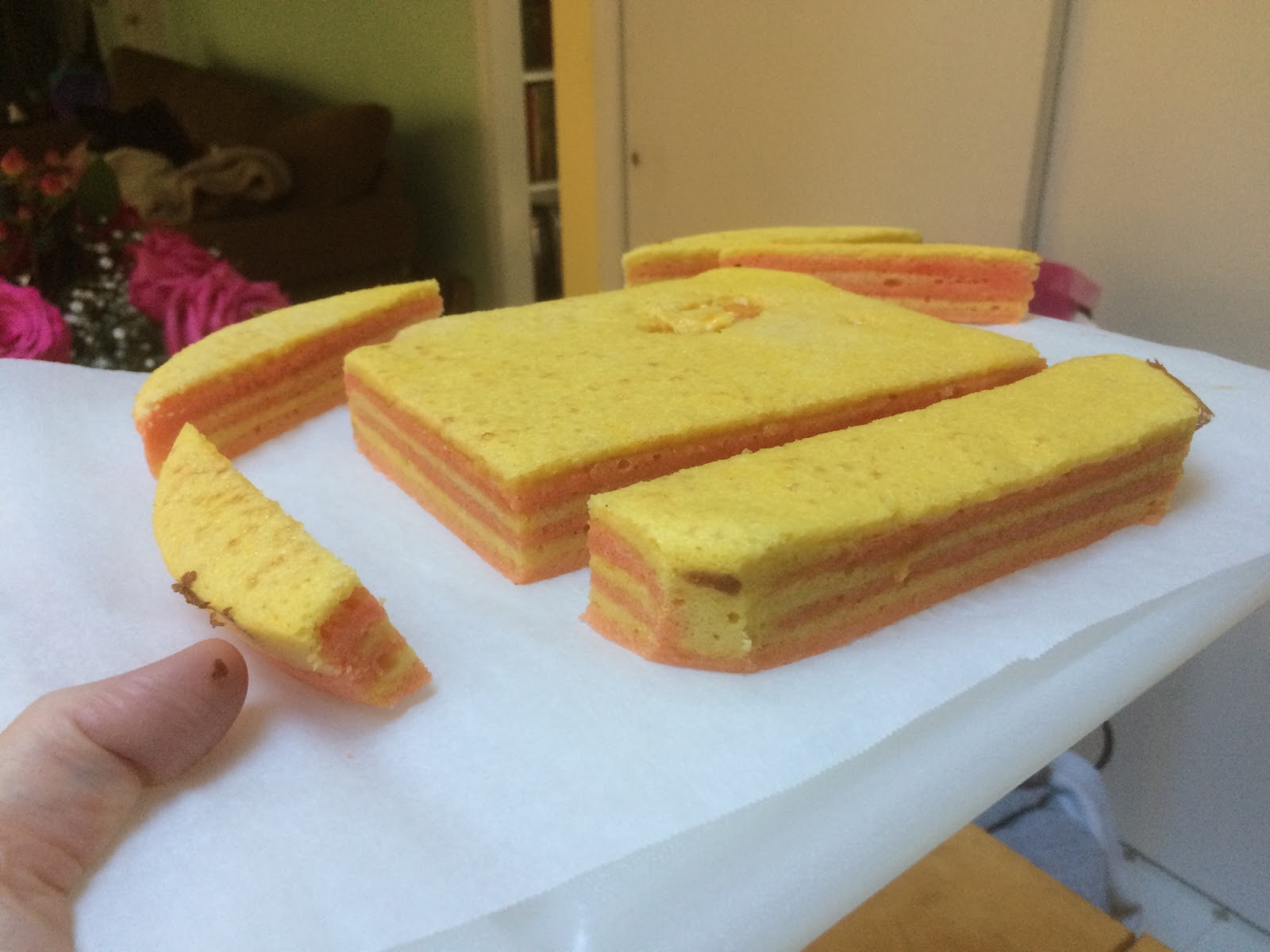
Quite a few of the recipes for sarawak kek lapis were not in English, which makes sense since it is apparently a Malaysian specialty. I did find one in English that didn’t take a dozen eggs to make–only seven. (Kek Lapis–Indonesian Layer Cake.) The layers weren’t colored and it seemed very mildly spiced, but I tried it, adding orange zest and cardamom and food coloring to make alternating layers.

Unfortunately, I was so nervous about overcooking the layers that I ended up undercooking them. When I tasted the edges, I realized that I hadn’t flavored it enough either. It did have pretty layers, though, where they weren’t gooey and underbaked.

Attempt at a sarawak kek lapis style cake with pink and yellow layersView of the layers of attempt at sarawak kek lapis cake

Something about the process of piling batter upon partially cooked batter made me think of pancakes. You know how the underside of a pancake shows where the first scoop of batter landed, and where subsequent additions of batter spread out from it? I decided to try making a version of kek lapis using pancake batter. I used an extra egg, thinking it would cook more quickly that way, and some extra sugar (pancakes aren’t very sweet by themselves.) I divided the batter into four bowls and colored them brightly.

I did get layers, albeit very, very uneven ones, and I did cook it all the way through. However, the result was very eggy, like the inside of a popover, only heavier. While I like popovers, I don’t like heavy, eggy cakes. The second try at a Sarawak style cake ended up in the compost like the first.

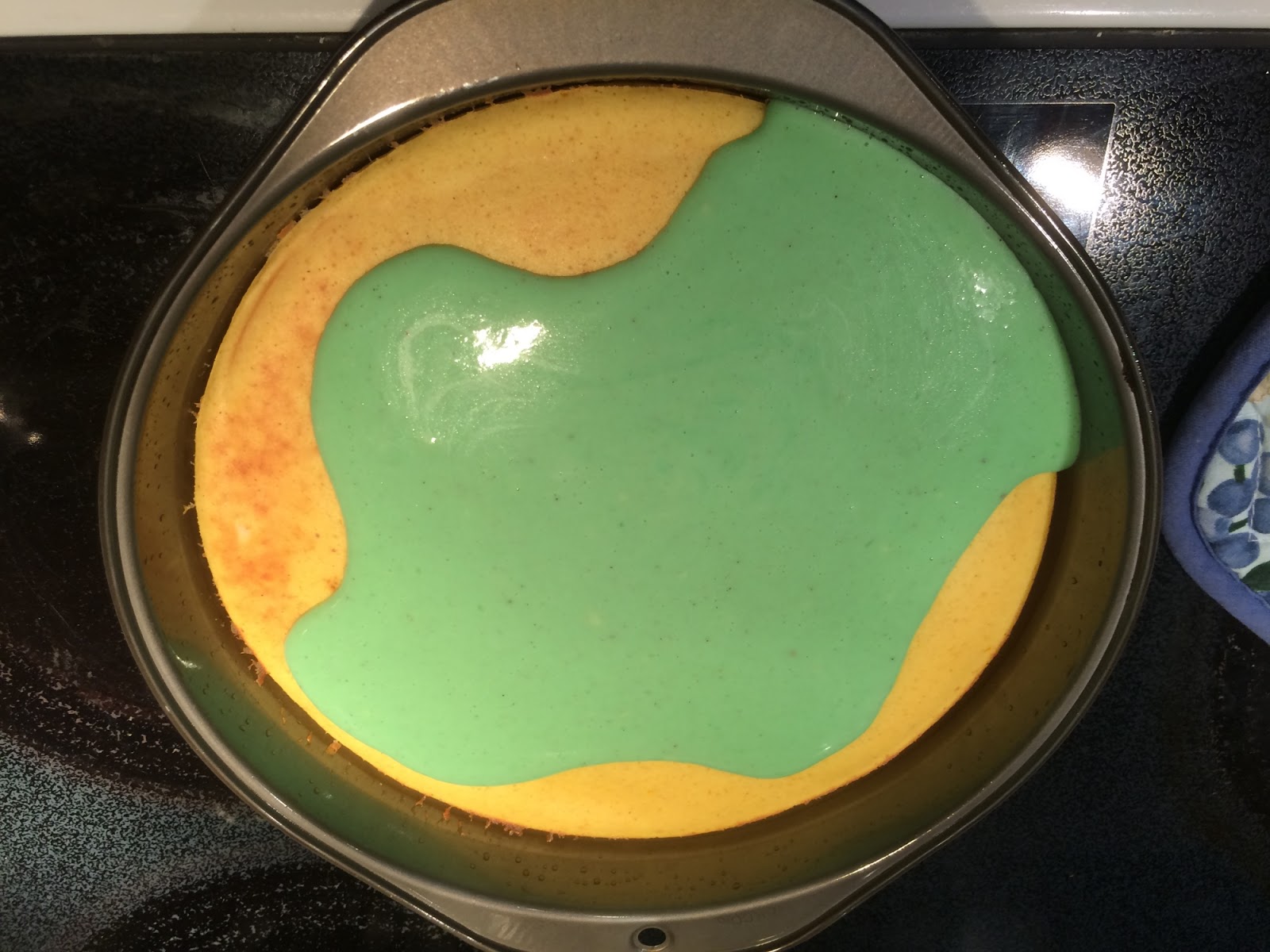
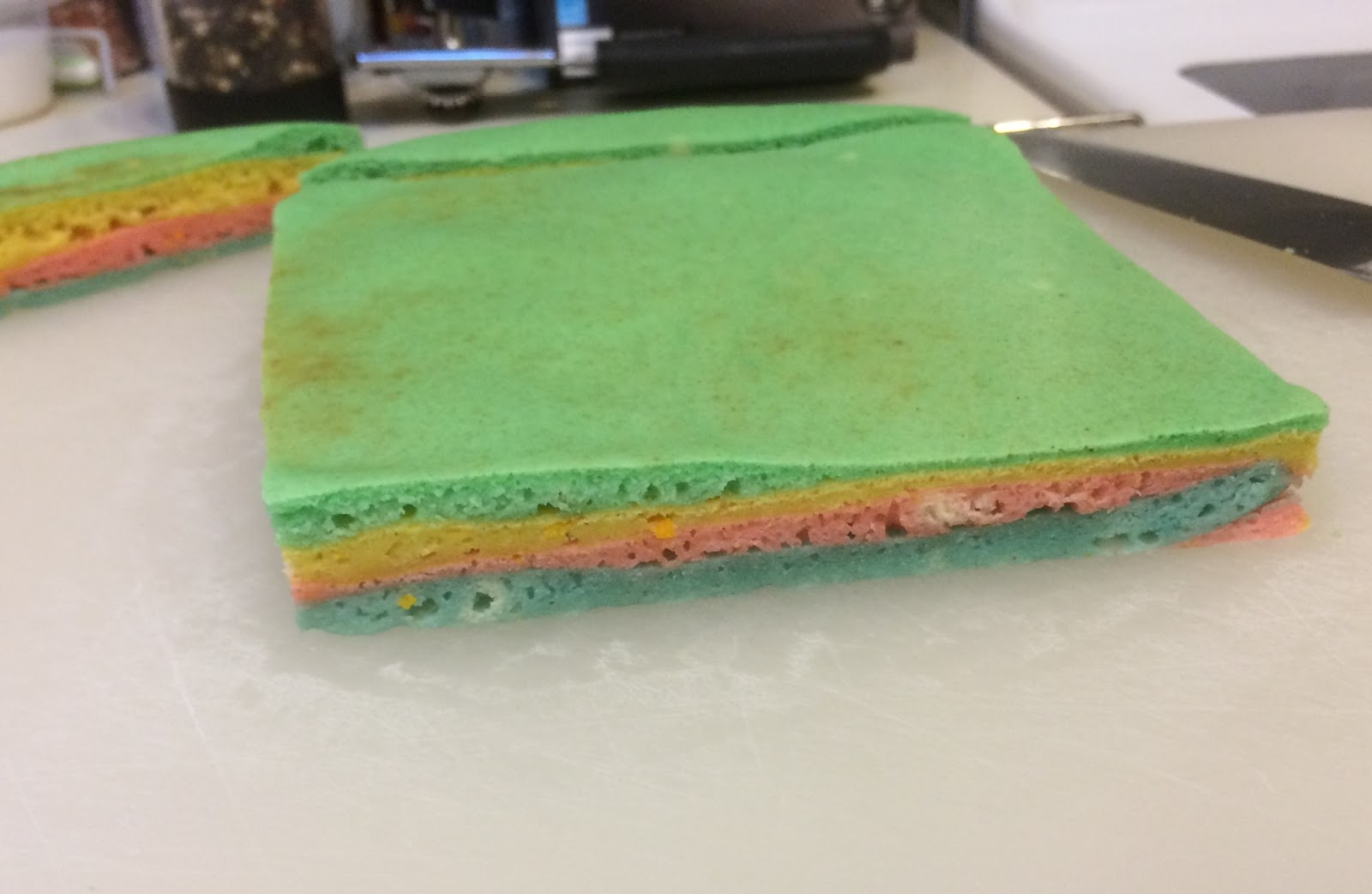
A four-layered attempt at making a sarawak style cake using pancake batter in green, yellow, pink and blue

Finally I decided to use a familiar cake recipe, a hot-milk sponge cake from the Better Homes and Gardens (1996) cookbook. It’s a very sweet cake, but reasonably airy and light on butter, so I thought it might do. Also, it requires only two eggs and doesn’t require that the whites be separated out and whipped, which makes it a lot easier that the first kek lapis recipe. I added orange zest, then divided the batter into four bowls and added cocoa powder to two of them and food coloring to the other two.

Oops–stirring in the cocoa and food coloring definitely took away some of the carefully fluffed up volume. As the bowls of batter sat waiting their turn in the oven, I could see bubbles appearing on the surface. Not good. Perhaps I should have waited to stir in the color of each bowl until just before pouring it into the pan.

After baking–I mean broiling–the layers, I put the cake in the center of the oven at a more usual 350 to finish baking. I didn’t want another underbaked cake.

The result? Very uneven layers, but layers nonetheless. And with the orange zest, cocoa powder, and huge amount of sugar–a moderately tasty cake.

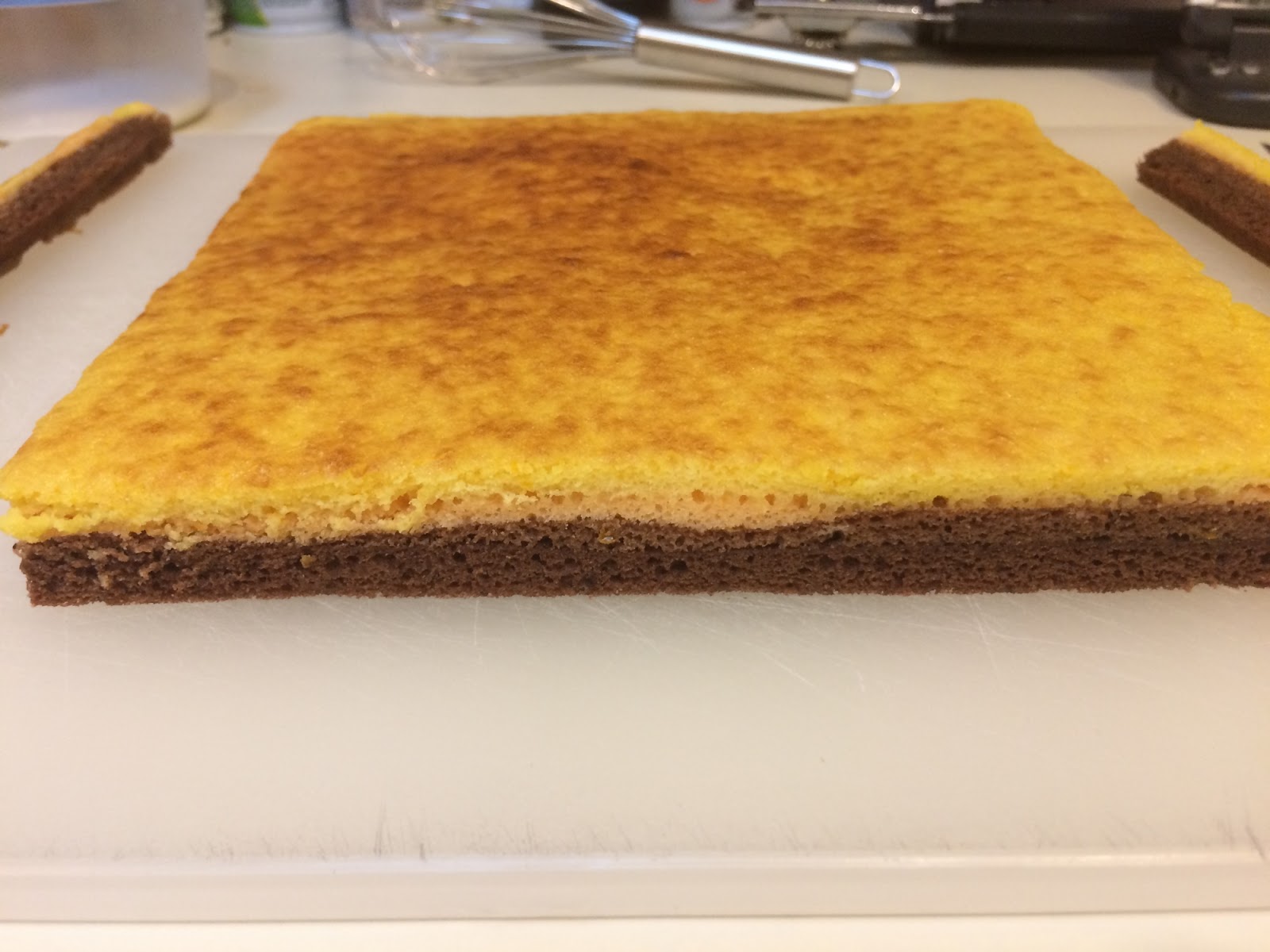
Hot-milk sponge cake with orange and cocoa layers, broiled like sarawak cake

I’m not sure when I would actually need such a cake, but perhaps I might want squares of colorful cake for some festive occasion.

Squares of hot-milk sponge cake with orange and cocoa layers, broiled like sarawak cake

Now that I’ve finally created an edible cake in the style of sarawak kek lapis–or at least the first stage of a kek lapis–I think I can move on to other baked goods. Time to watch some more Great British Baking Show!

Till next post.

That Smells Good!–the changing appeal of scents, in and out of context

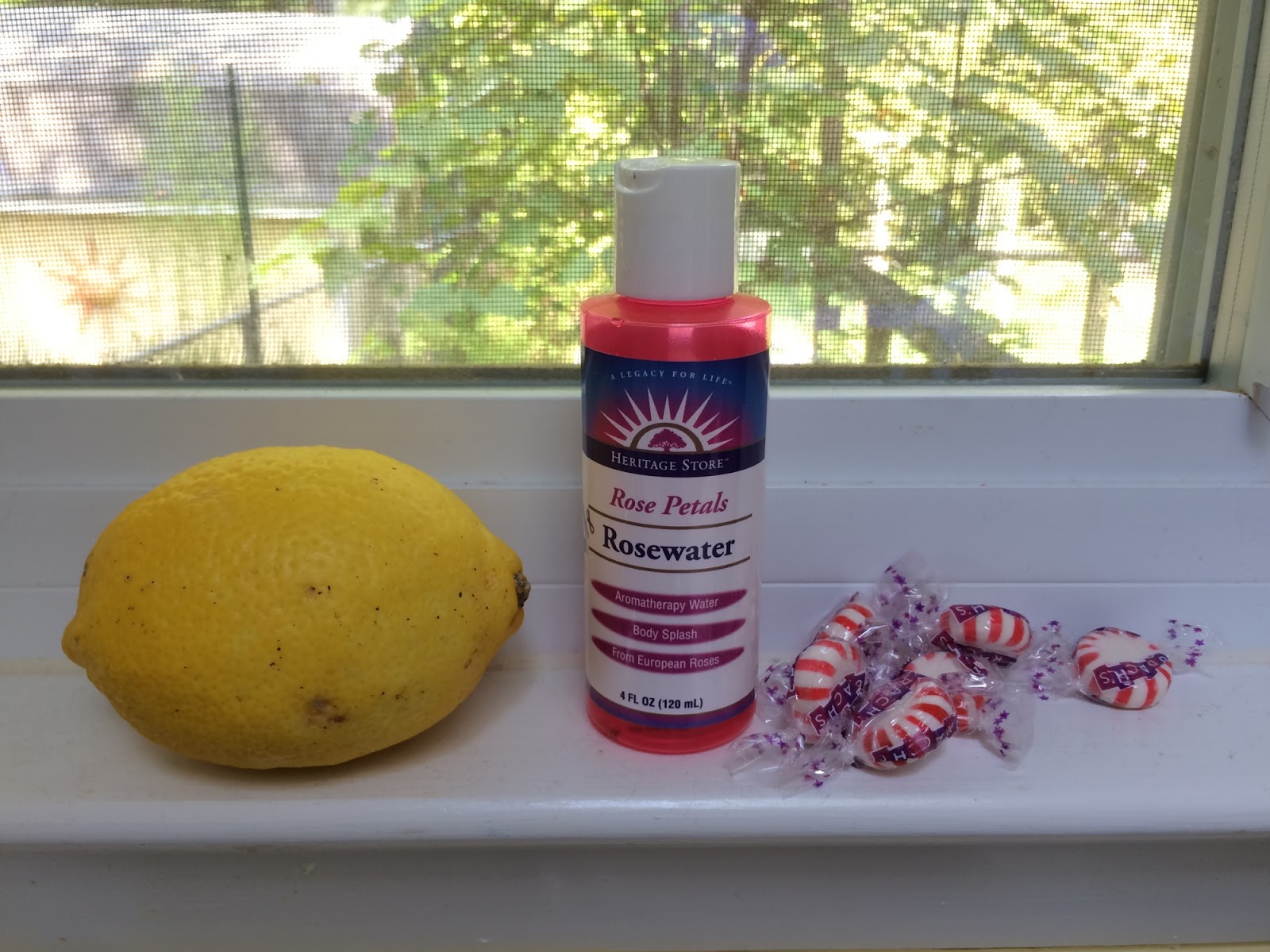
Windowsill display of lemon, rosewater, and peppermint candies

Peppermint, cinnamon, lemon–what do these scents have in common? Not much, considered strictly in terms of how they smell. One is minty, one is spicy, and the last one is citrusy. But they are all flavors as well, and I like them both as flavors and as fragrances.

That last connection isn’t automatic. Not every delicious food aroma is also good as a fragrance in its own right. For instance, the smell of chocolate–of brownies baking–is heavenly when I anticipate that I may get to eat some of them. Chocolate-scented stationery, however, does nothing for me. I’d rather perfume it with bergamot.

Oddly, I feel this distinction even more strongly when it comes to vanilla. I like the smell of vanilla in cookie dough or pudding, but I really dislike vanilla-scented candles, air fresheners, and heavily vanilla-based perfumes. Given how many of these vanilla-scented items are out there, I am clearly in the minority on this.

Most people (including me) would be reluctant to perfume their clothes or hair with the odor of sauteed onions and garlic. Onion-scented air-freshener? Ick. And yet, when I walk into the house and discover that the kitchen is fragrant with sauteed onions and garlic, my mouth waters and I say, “Wow, that smells good!” And it does. But only in the right context.

There are other fragrances that are pleasant so long as they aren’t in a food context. For some people, rose is one of these, while other people like rosewater-flavored desserts. I’m guessing that no one really wants their food to smell of lilacs or hyacinths, though, or Chanel No. 5. Bleah.

Is there any context that affects the appeal of a scent besides food? People do develop a familiarity with some scents in a cleaning context (lemon, peppermint), but nonetheless cleaning products do manage to be popular in a variety of other fragrances (floral, grapefruit, lavender, “sea salt”,…) Maybe personal fragrance–do we really want our bodies to smell like peppermint candy? Peppermint soaps and lotions certainly exist, but I’m having trouble imagining a perfume called “Fresh Mint Seduction” or “Lemon Heat”.

Can you think of any other contexts?

Till next post.