So Many Books, So Little Attention


“You mustn’t want to do everything at once. In a day a man can eat only three bowls of rice; he can’t eat ten or more days worth of rice at one sitting. In a day you can read only so much, and your efforts have a limit as well. You mustn’t want to do everything at once.”
(p. 133, Chu Hsi: Learning to Be a Sage, trans. Daniel K. Gardner)
My reading habits are going downhill. I’ve been reading the same book, Flavor: the Science of Our Most Neglected Sense, for well over a week now. It’s a good book—every time I pick it up again, I enjoy it. So why haven’t I finished it yet?
I’ve had time to read. In fact, it seems like I’ve done plenty of reading recently. I’ve been looking at everything from the newspaper to the latest e-newsletter from our public waste facility. Yet I remember very little of it.
In part, the problem is information over-availability. When I was a child and we were overseas, the reading options were mostly limited to the books we had on hand and a small school library. My mom ordered books by mail and we visited bookstores during visits back to the States, but still, it was possible for me to finish reading my new books and not yet have anything else to read. Fortunately, I was happy re-reading my favorites over and over. I got to know them very well.
Now I have too much to read. If you are a reader and you have only a few books to read, then you spend more time on those books. On the other hand, if you are constantly running into text of one sort or another, then you may end up spreading your time thinly over your various reading options.
Then again, you may not. When I was in graduate school, I read philosophy papers and books. If they were part of a class or relevant to my interests, I read them over and over. It wasn’t from lack of other reading material. There were libraries, bookstores, and my own overfilled bookshelves. But I had reason to read them carefully—to pick out the argument, to consider the objections raised and the replies—so I could come up with my own response.
I’m not in graduate school now, nor am I working in philosophy. I am not compelled to read thoroughly and with attention to detail. Nor am I faced with limited reading options that result in my re-reading anything that seems interesting. Instead, I have piles of books I haven’t read yet, magazines, newspapers (a new one every day!), and of course, the internet.
There’s a lot one could say about reading and the internet, but what matters here is the quantity of written material out there. It varies enormously in quality and subject matter. The only way to know if an article is worth my time is to skim over it.* The same is true of newspapers and magazines, though the quality is a bit more predictable.
So I find myself spending a lot of time skimming over articles rather than actually reading them. In fact, I spend so much time doing this that it is starting to become a habit. I pick up a magazine and skim through it, wondering if there is anything really interesting, and then find myself skimming through an article that does look interesting.
Wait! If the article is interesting, why am I glancing through it rapidly, skipping bunches of paragraphs here and there, checking to see where the article is headed… instead of settling down and actually reading it?
Sometimes I tell myself that right now I am just checking for interesting articles. I will read them later at some more leisurely time. But the amount of time I spend at this half-hearted sort-of-reading could be much better spent actually reading. And when I apply this sort of half-hearted-reading to the newspaper, I end up wasting quite a lot of time.
What is the solution to my increasingly bad reading habits? Is there a New Year’s Resolution that will help me get more out of my reading time?
Here’s one possible resolution, though I don’t know if I could actually carry it off. When I catch myself skimming, I should stop and ask if I have a good reason for skimming. If I don’t, then I should decide—do I want to read this, right now, or do I not? If not, move on to something else.
Sometimes there are good reasons for skimming. If I am looking for a particular bit of information, especially on the internet, then skimming is pretty much required. If I am trying to decide whether to buy or check out a book, I need to glance through it, which is a bit like skimming (but only a bit.)
On the other hand, there is no point in skimming through a book I’ve already bought and intend to read. And yes, I have found myself doing this, even with eminently readable books. All I can conclude is that my mind is restless and I need to focus more. “Read the book, or do not. There is no skim.”
The tricky situation is when I don’t know whether an article is really one I want to read. Unfortunately, the newspaper is full of articles like that, so I can waste a lot of time skimming. How can I choose more quickly? Decide based on the headline only? The first two paragraphs? Make a list of subjects to read about and ignore everything else?
Suppose I catch myself skimming and decide that yes, I do want to read this article. How do I switch gears from skimming to actually reading? Take notes, maybe? That would force me to focus on what the article actually says, and might help me remember some details. On the other hand, it might be more work than I’m prepared to put in.
It will be interesting to see whether I actually do manage to improve my reading habits over the next year.
“In reading, you must keep your mind glued to the text. Only when every sentence and every character falls into place have you done a good job of thinking through the work. In general, the student should collect his mind so that it’s completely tranquil and pure and in its normal activity and tranquility doesn’t run wild or become confused. Only then will he understand the text in all of its detail. Reading like this, he’ll understand the essentials.”
(p. 145, Chu Hsi: Learning to Be a Sage)
Till next post.
*Actually, there are some short cuts. Slide-show style? Almost certainly not worth the time.
Maps, Mystery, and Adventure—decorating with story


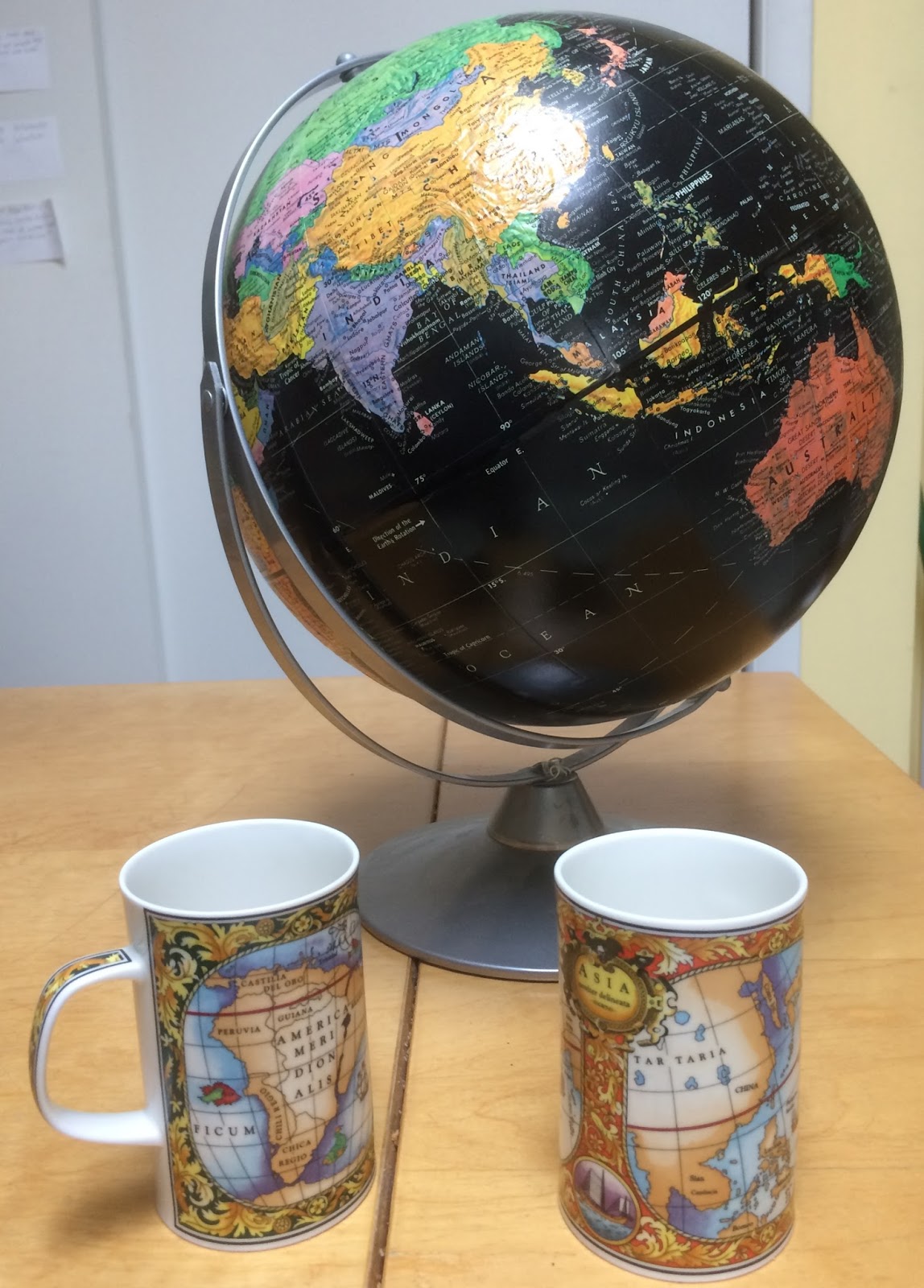
I have a pair of porcelain mugs decorated with antique map designs, and an out-of-date globe. What is it about maps, both real and fictional, that makes them so appealing as decoration?
two mugs decorated with antique maps and an out-of-date globe
Decorative maps (globe used to be current)
Some maps are intended to be almost purely functional—the paper road maps in my car (still!) are like that. I have seen even these maps used for decoration, especially if they depict a familiar area (e.g. get a mug with a partial map of your hometown on it), but generally maps tend to be less functional as they get more decorative.
But why decorate something with a map rather than, say, flowers or cars or an abstract design?
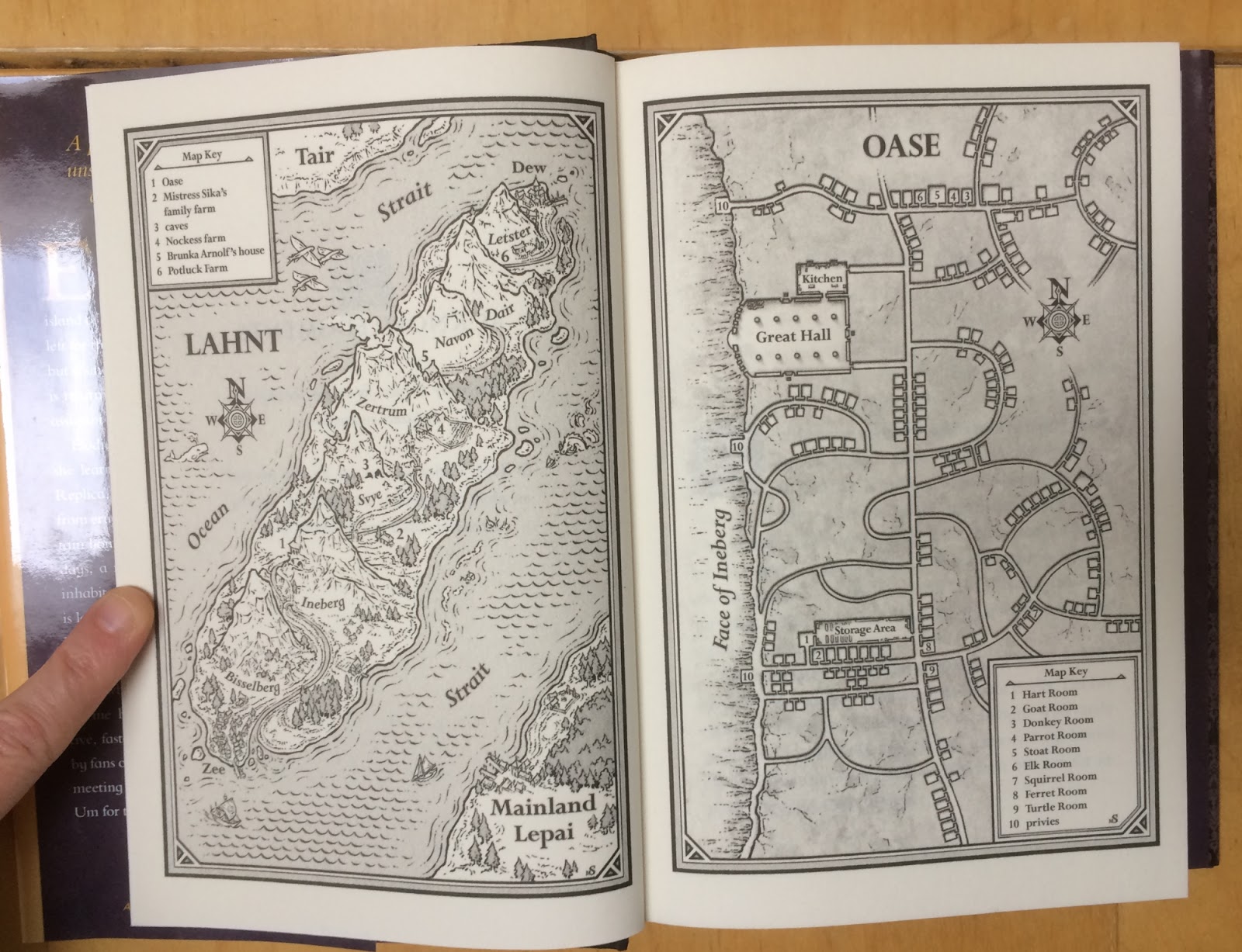
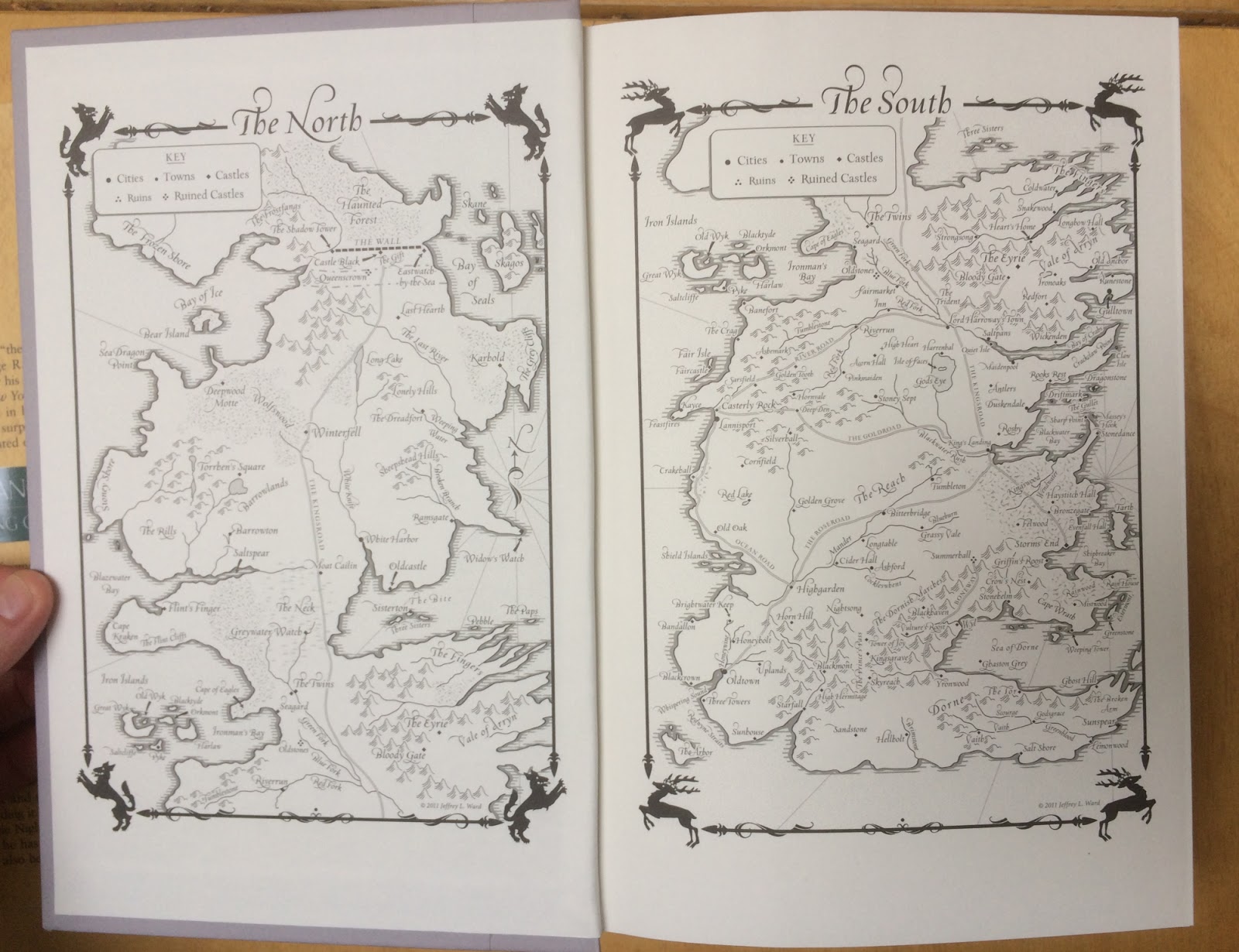
Maps show us worlds. Worlds that are, worlds that used to be, and worlds that never were, except in imagination. The right kind of map suggests travel, stories, and adventures. Antique maps, with their limitations and inaccuracies, recall a time when the world was a mysterious place and explorers really didn’t know what they would find. There might be sea serpents, golden cities—even buried treasure, where x marks the spot. In fantasy novels, maps show a world that may really have all those things. Maps are sufficiently popular in fantasy that someone even designed a spoof of fantasy novel maps.
photo of westeros map
Westeros, from Game of Thrones (rather than using Middle Earth as an example)
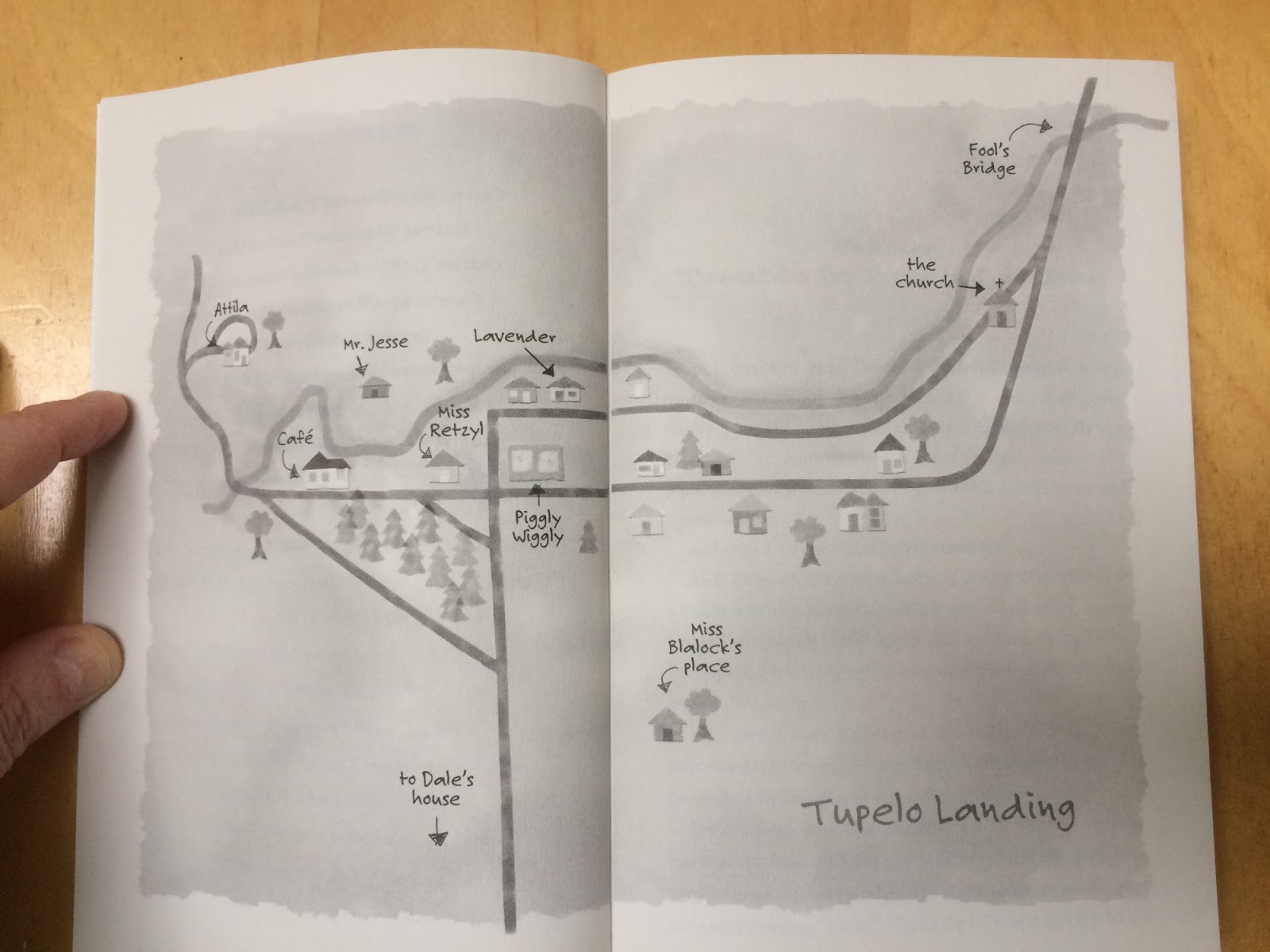
Maps in mystery novels have a quasi-functional use. A house plan can help the reader track who was where and when–and how a secret passage might have allowed someone to be where they supposedly weren’t. In her mind’s eye, she can see different possible scenarios suggested by the layout of the mystery’s setting.
photo of tupelo landing map
Tupelo Landing, from Three Times Lucky by Sheila Turnage
Maps of the world we know don’t have to be purely functional, or even functional at all. Consider the maps that are sometimes designed as souvenirs of a town, where streets aren’t to scale and landmarks are amusingly caricatured. They’re fun, decorative, and sometimes sentimental, but hardly something that will help you navigate, if you should find yourself without GPS and Googlemaps.
photo of map from Stolen Magic
Stolen Magic by Gail Carson Levine–fantasy and mystery both
In A Great Reckoning, by Louise Penny, an old orienteering map features heavily. But it isn’t a straightforwardly practical map—its maker clearly intended it to refer to landmarks in someone’s personal history. The map isn’t shown in the book, but it is described at various points.
“At first glance, it didn’t look like a map at all. While worn and torn a little, it was beautifully and intricately illustrated, with bears and deer and geese placed around the mountains and forests. In a riot of seasonal confusion, there were spring lilac and plump peony beside maple trees in full autumn color. In the upper-right corner, a snowman wearing a tuque and a habitant sash, a ceinture fléchée, around his plump middle held up a hockey stick in triumph.” (p. 35)
“Yes, it took a while to see beyond all that, to what it really was, at its heart.
A map.
Complete with contour lines and landmarks. Three small pines, like playful children, were clearly meant to be their village. There were walking paths and stone walls and even Larsen’s Rock, so named because Sven Larsen’s cow got stuck on it before being rescued.
Gamache bent closer. And yes, there was the cow.” (p. 36)
Finally, there is something intriguing about the names on a map, not just the images. Some place names are more interesting than others, and just giving an area a name somehow makes it special. Years ago, my daughter and I were at Great Wolf Lodge, a kind of hotel/amusement/water park. The hotel was set up so that the halls could be part of a game in which kids roamed around with electronic “wands”, which when waved at various items, caused them to do something or display something. In keeping with the magical theme, the halls and public areas of the hotel had names.  I should have written some of them down, but I think they were along the lines of “The Enchanted Forest” and such. I commented to my daughter that we should name the areas of our home something more interesting than “Hall Bathroom” and “Mom’s Study.”
(I did in fact name one area of our yard “The Fairy Garden”, and another area that happened to get planted in rosemary, lavender, chives, catmint, and butterfly bush, “The Purple Garden”.)
Having said all this, it is a curious truth that I have not had much luck making maps for the stories that I write. I have some general diagrams to help me keep straight left and right, north and south—but that’s about as far as it goes. And yet, I would love to have some pretty maps to illustrate them with. Maybe I’ll give it another try someday, allowing myself to emphasize beauty  and mystery rather than detail.
Here there be dragons.
Till next post.

Writing a Mystery Without Murder In My Heart


It’s November! Finally it is National Novel Writing Month—NaNoWriMo. This year, I am trying to write a mystery–adult, not middle grade or young adult. I need 50,000 words by the end of this month, and a beginning, middle, and end.
Tea cup on scalloped white napkin with necklace and Christmas card.
Tea, jewels, and Christmas–all part of the story.
I’ve tried to write mysteries before without success. Somehow my mind doesn’t work in the right way for plotting a clever murder (and how the murderer will nonetheless fail to get away with it.) I have the same problem with heists and other criminal plots. I love to read books with ingeniously carried out crimes, but I draw a blank when I try to think one up myself. I think other authors must look around them, wherever they are, and notice potential murder methods. As in “Hey, look at the spike on that beach umbrella. I wonder if you could kill someone with it, then put the umbrella up so no one would notice the blood on the spiky bit.” And other such thoughts.
Okay, so apparently I can come up with a murder method, at least a weak one. But it doesn’t happen easily or spontaneously.
There’s another, more serious, problem. I don’t really want to write about a murder.
I have no difficulty enjoying mysteries in which one (or two or three) people are murdered. You’d think it might bother me, but it doesn’t. Granted, I avoid the really dark, disturbing varieties of murder mystery, but I don’t read only the humorous or cozy variety, either. One of my favorite series is the one with Inspector Gamache, by Louise Penny, which is serious but not overly dark.
So why doesn’t murder bother me when I read a mystery? I suppose it’s sufficiently unreal, and so entirely expected, that I don’t take it to heart. And yet, when I set out to write a story in which one of my characters kills another one, it feelsdifferent. To make sense of the murder, I have to have a character who is so dark or so desperate that he is willing to kill. And I have to have other characters who can be suspected of being that dark or desperate. Suddenly it all feels much too serious—a world I don’t want to live in long enough to write about.
It could be partly that I have been very lucky in my family, neighbors, and co-workers throughout my life. I haven’t had a lot of experience with the kind of people that make you really want to kill them, or the kind of people that leave you scared for your own safety. Mostly I meet those people in fiction—and then I do see red and want violent things to happen to them. Maybe if I had to live with such people, I would be more interested in putting those people in a story and either killing them off in a painful manner, or meting out justice to them after having them kill someone. Or maybe it’s got nothing to do with that. I really don’t know.
So I’m not writing a murder mystery. At least, I don’t think so. The plan is for a robbery to take place, but lots of things could change over the course of the month. Somehow I’ve already gotten 10,000 words in (which is a speed record for me, I think) but I haven’t gotten much farther than introducing my cast of characters. That theft better happen soon or I won’t have a story.
Cat sniffs the teacup on the white napkin near the necklace and Christmas card.
The cat investigates. Not in my novel, however.
Till next post.